

Your team is wasting hundreds of hours on job descriptions.
Between version chaos, approval bottlenecks, and documents scattered across disconnected drives and inbox threads, managing job descriptions manually stands as one of the most quietly expensive operational liabilities in enterprise HR. Mosh JD automates administrative friction so HR leadership can focus on high-impact strategic growth.

Manual JD Management Is Burning Hours Your Team Doesn't Have
It doesn't feel like a crisis. It feels like Tuesday.But the hours add up. Slower hiring. Misaligned comp. An HR team that's always behind.
Your HR team has three versions of the same role saved in different places. A hiring manager edited their own copy. A comp analyst is working off something from 2021. Legal reviewed a version that was never finalized.
When no one can agree on what the job actually is, everything downstream breaks. Job postings attract the wrong candidates. Interviews are misaligned. Offers get delayed. Onboarding sets people up to fail. And when someone asks which version is current, the honest answer is: nobody knows.
HR drafts the profile and sends it to the hiring manager, only to receive it back with conflicting, unexplained tracked changes. Once it is routed to legal, the document inevitably gets lost in an endless email chain, forcing the team to start over with a brand-new draft and absolutely no record of what changed or why. With no established workflow, accountability, or audit trail, a role sits open for weeks longer than it needs to because the entire JD approval process is held together by email chains and hope. All the while, the business is left stuck waiting on a critical hire.
Every update becomes a manual lift that requires copying an old version, making changes, saving a new file, and emailing it around for review. Once someone saves a local copy, you are instantly back to juggling four conflicting versions. There is no standardization across teams or consistency in language, and there is absolutely no way to know what is current and what is stale without opening every single document. For organizations managing 100, 200, or 500+ roles, this represents a deep structural problem that multiplies with every new hire, every reorg, and every comp cycle.
What Manual Job Description Management Is Actually Costing You
The operational drag of managing JDs manually isn't just an HR problem. The cost shows up in the P&L, in recruiting metrics, and in decisions made with data nobody fully trusts.
Hundreds of hours lost to admin every year
HR professionals report spending significant time on job description tasks that should take minutes — searching for the right version, reformatting documents, chasing approvals, reconciling conflicting edits. Across a team managing 200+ roles, that administrative burden compounds into a meaningful cost that's easy to overlook because it never shows up as a single line item.
Slower hiring has a real cost
Every day a role sits open costs the business — in lost productivity, in manager bandwidth spent covering gaps, and in recruiting resources extended. When a slow JD approval process delays a job posting by two or three weeks, that delay has a financial value. For revenue-generating or senior roles, it can be significant.
Comp decisions made on unreliable data
When job descriptions don't reflect current role requirements, salary survey matches are off. You're benchmarking roles that no longer exist against market data that doesn't apply — and building pay grades on a foundation that won't hold up in a pay equity audit or a compensation committee review.
Compliance risk that's hard to see until it's a problem
Inconsistent job descriptions across teams create exposure in pay equity analyses, FLSA exemption decisions, and job leveling. When documentation is scattered and version history doesn't exist, "show me what this role required and when" becomes a question with no clean answer.
Strategic decisions without clean inputs
Workforce planning. Skills gap analysis. Succession planning. All of it runs on job data. When that data is fragmented, inconsistent, and manually managed, the decisions built on top of it inherit the same instability.
What efficient job description management actually looks like
Replacing manual tracking with a dedicated data governance layer introduces immediate operational clarity across every downstream talent program.
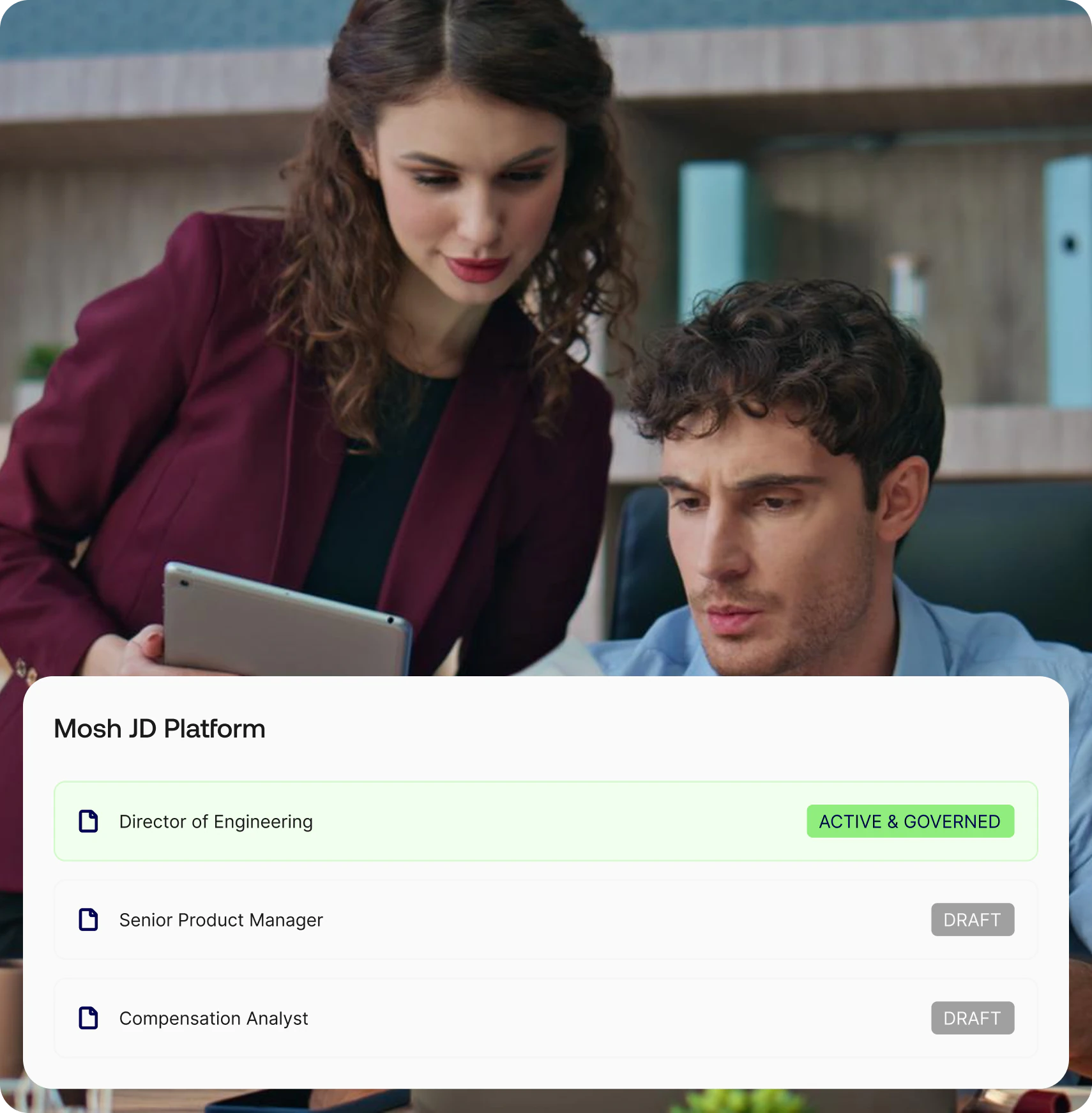
Every stakeholder including HR, hiring managers, compensation, and legal works from the exact same document within the same system in real time. Version confusion disappears entirely, allowing downstream decisions to improve dramatically.
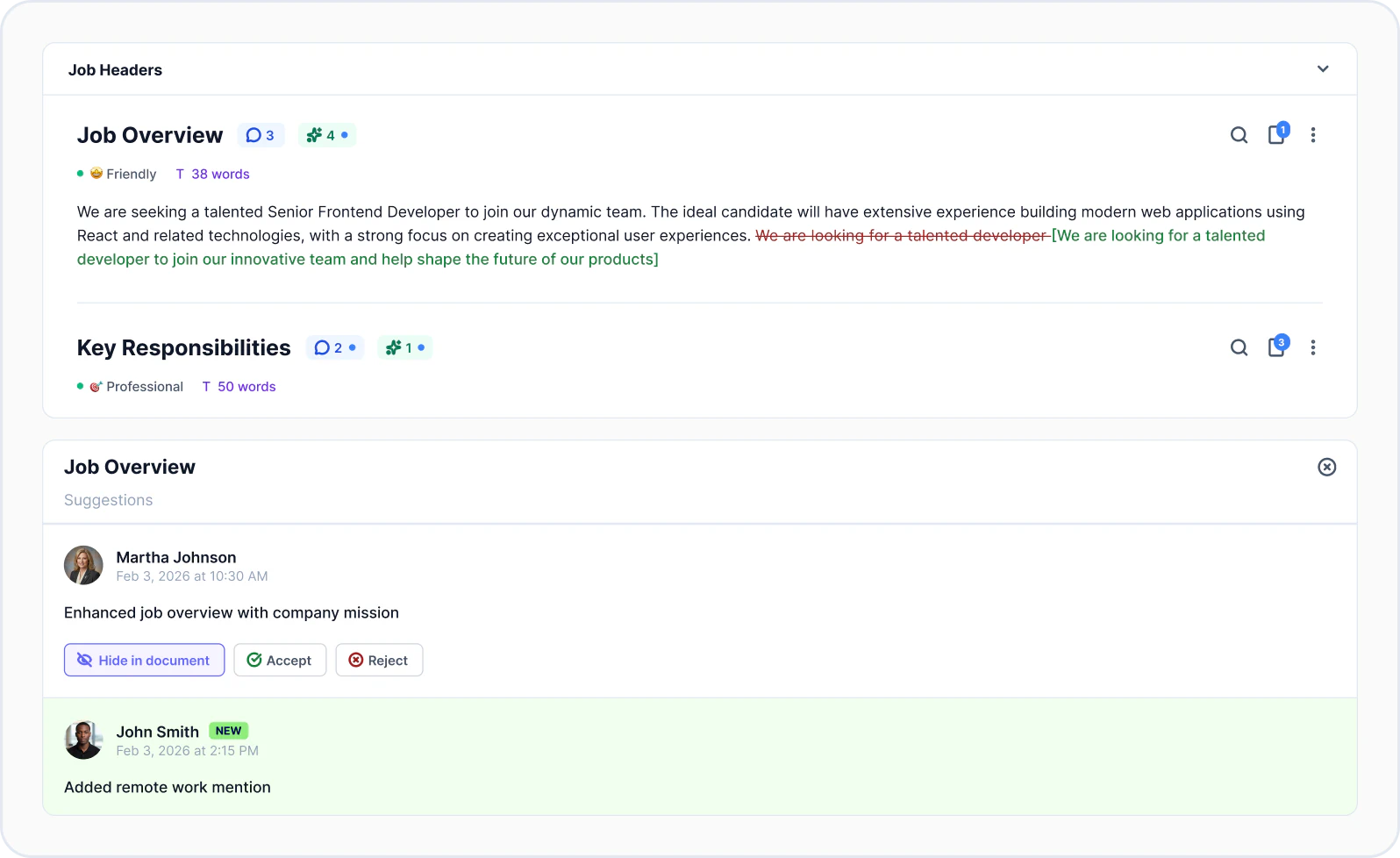
Structured workflows replace manual email chains. Reviewers receive automated notifications, submit their input, and approve content directly within the platform. Every single decision is logged and every change is tracked. This permanently eliminates the need to chase approvals or start over from scratch.
You gain a consistent format, consistent language, and consistent structure across every role, department, and location. Manual document policing is permanently replaced by proactive system design.
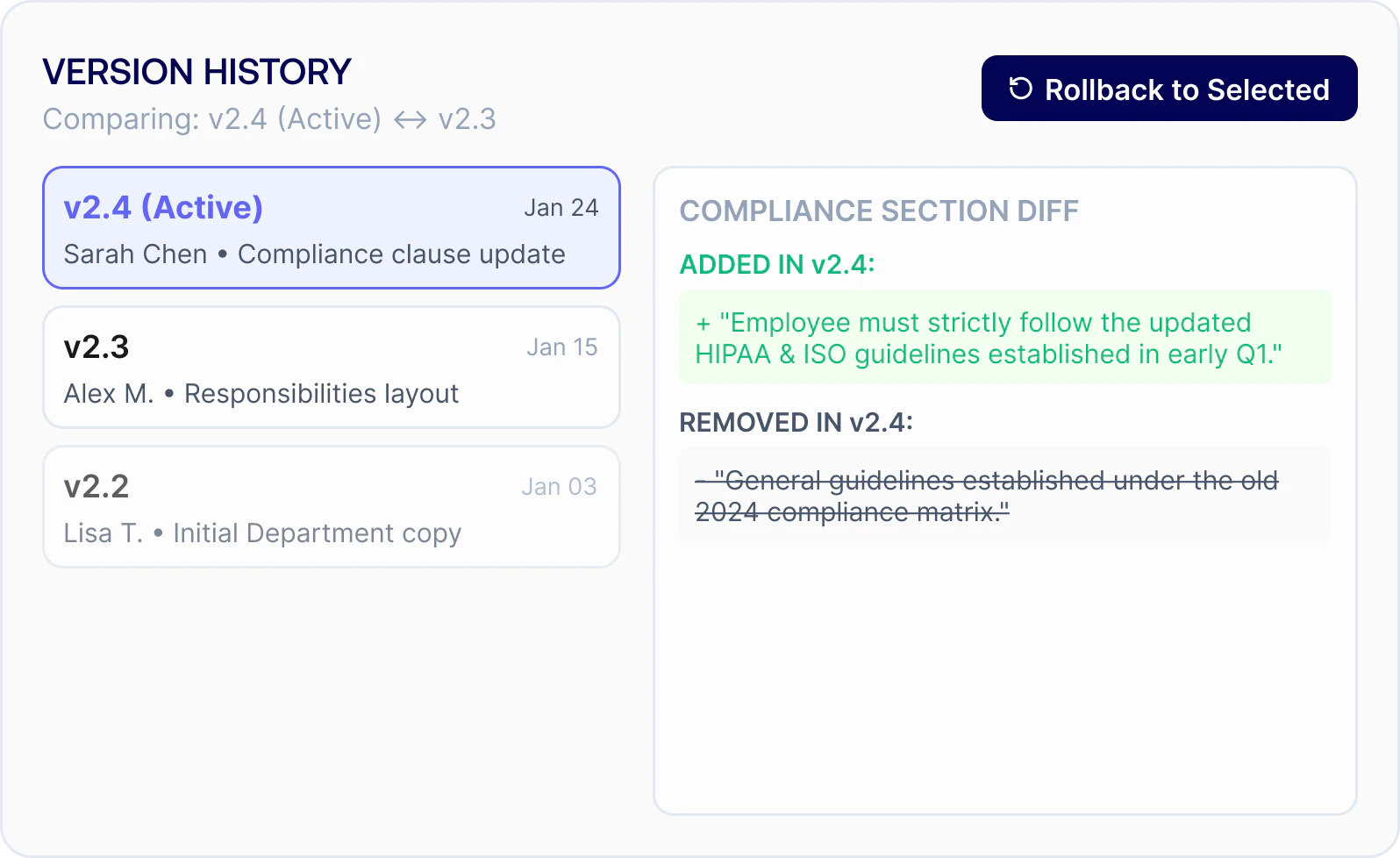
Every version, edit, and approval is documented automatically. When compliance questions arise, the comprehensive historical record is already prepared. Zero manual reconstruction is required.
As the administrative overhead of managing job descriptions shrinks, HR leaders, compensation analysts, and HR operations teams get that crucial time back. Those recovered hours are seamlessly redirected into driving core business strategy.
How Mosh JD Eliminates the Manual Work
Mosh JD transforms job description management from a fragmented, file-based chore into a centralized, governed data ecosystem built for the modern enterprise.
Centralized Job Description Library
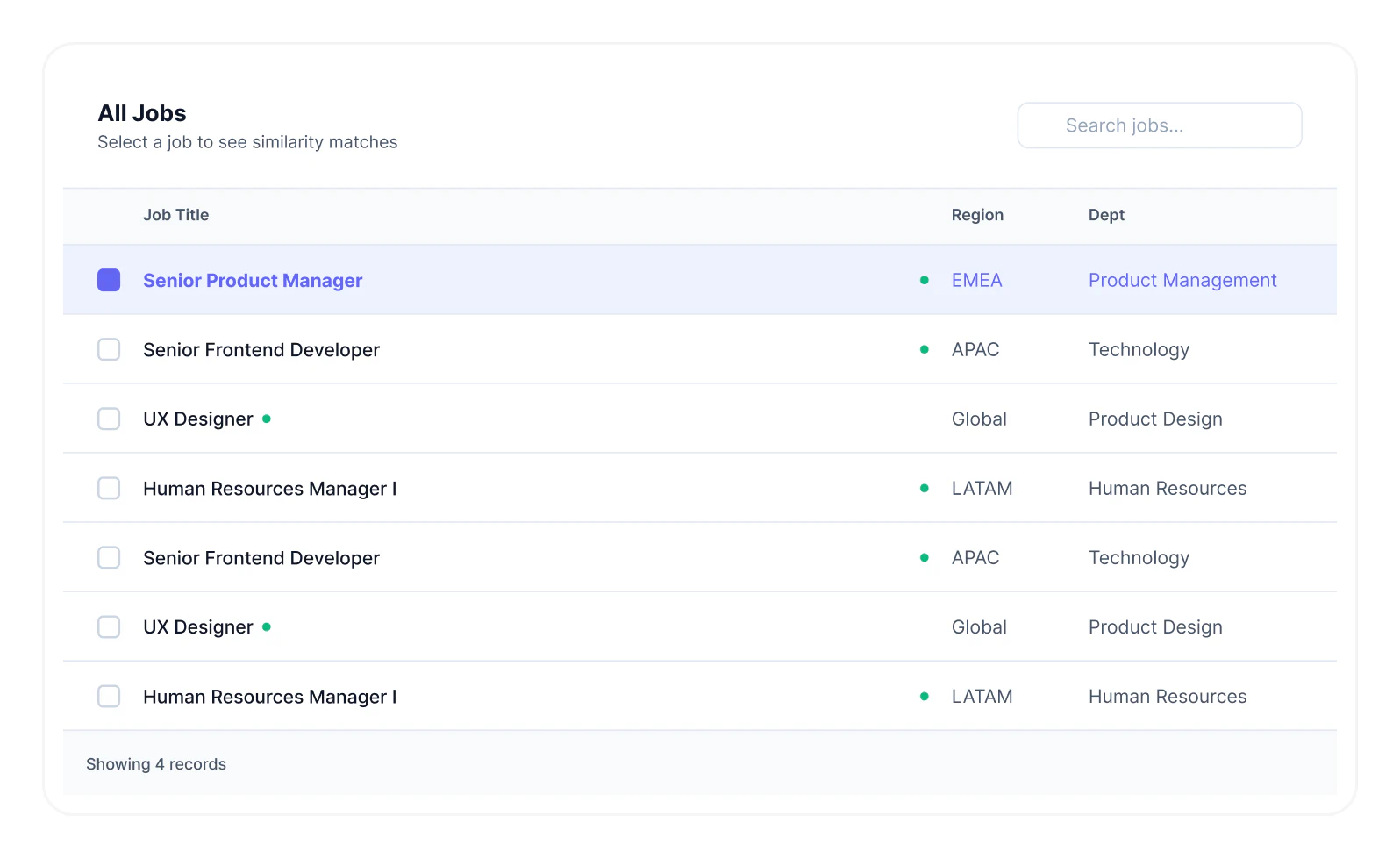
Every job description lives in one secure Centralized Job Description Database that is highly searchable, organized by department, level, or job family, and accessible to the right people with the correct permissions. This eliminates shared drives and confusion over which version is current.
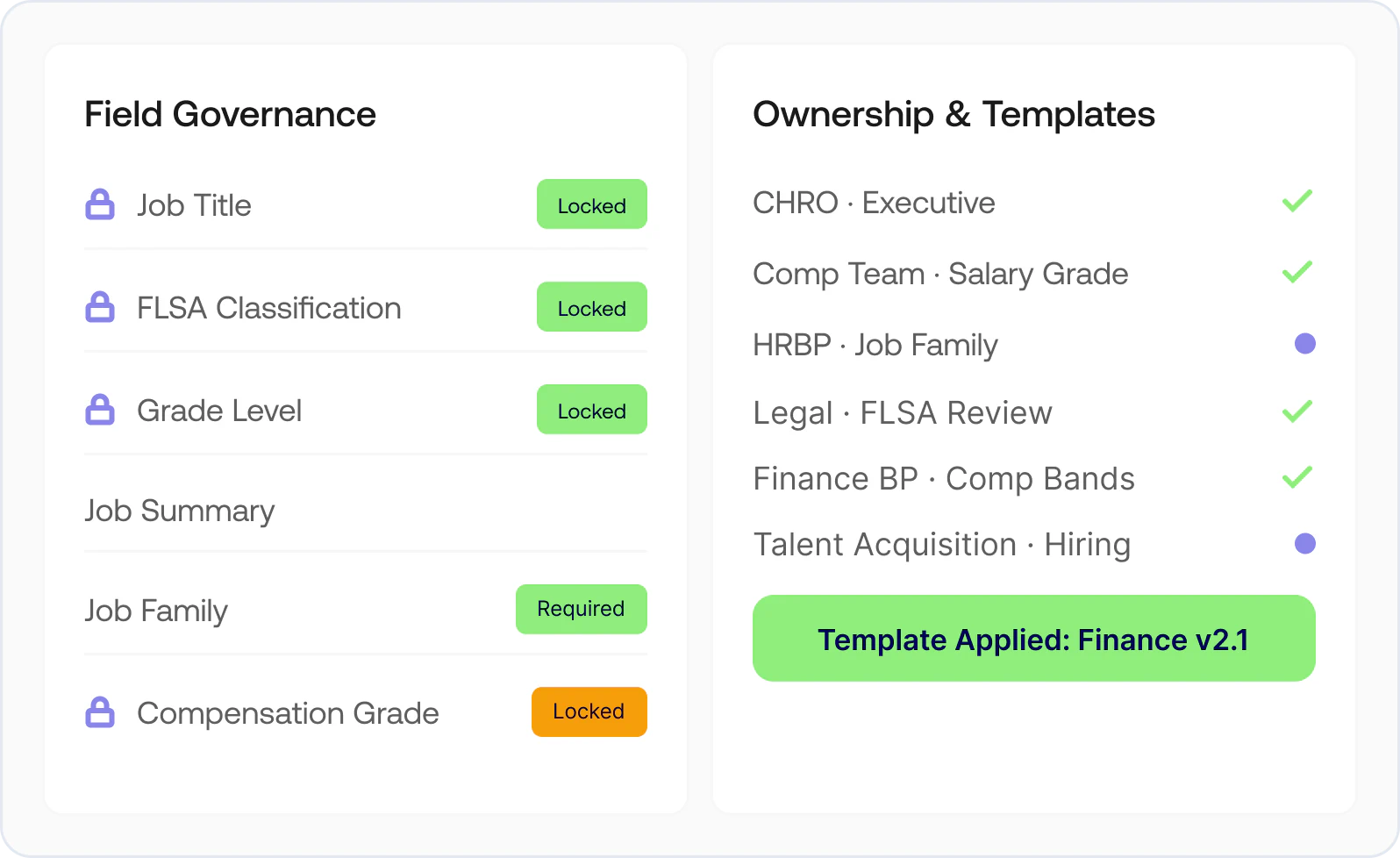
Where the operational gains show up first
What HR Teams Are Saying
A job description platform that just works.
“Finally, a job description platform that just works. Mosh JD was incredibly easy to learn, the usability is fantastic — it’s a breath of fresh air compared to the overly complicated systems we’ve looked at.”

— Collette, VP of HR
I can’t recommend Mosh JD more!
“I’ve been in HR since 2006 and used several different JD management tools over the years and I can’t recommend Mosh JD more! The tool itself is super slick and the guys building and supporting the tool are all about customer service.”

— Nick Howell, CCP, PHR, SHRM-CP
Powerful without being overly engineered.
“We were looking for a solution that wasn’t bloated with unnecessary features, and Mosh JD hit the sweet spot. It’s powerful without being overly engineered — exactly what our lean HR team needed.”

— Elizabeth, VP of Total Rewards
Automate your job
description workflow
Every hour lost to document tracking, manual revisions, and email chasing is time taken from the strategic programs that scale your enterprise. Bring structural governance, efficiency, and clarity to your workforce data with Mosh JD.