

Your Compensation Initiatives are Only as Good as Your Job Data
Inaccurate job descriptions create a shaky foundation for every compensation decision, leading to poor survey matches, undefendable pay grades, and market pricing that feels like a guess. Mosh JD equips your team with the structured job data required to build defensible benchmarks and a pay strategy you can trust.

The Comp Problem Nobody Talks About but Everyone Has
Compensation professionals invest heavily in survey subscriptions, market pricing tools, and benchmarking methodology. But there is a foundational problem that undermines all of it, and it sits one layer below the comp work itself. The job descriptions being matched to market data are outdated, inconsistent, and inaccurate.
The role your comp team is benchmarking against the survey data is described in a job description written three years ago. The hiring manager has added two new responsibilities. The technology stack has changed entirely. The scope has grown by half. But the JD still says what it said in 2021, because nobody updated it, and there was no system to flag that it needed updating. To resolve this operational gap, teams utilize a Job Update & Digitization Service to breathe life back into legacy files.
When job descriptions lack standardization, different departments describe the same roles in entirely different ways. Some write detailed outlines while others provide just three sentences or use titles missing from survey methodologies. This turns survey matching into a subjective exercise where two analysts might price the exact same role with a 15-20% variance. Ultimately, this inconsistency cascades outward to skew offer decisions, pay bands, and pay equity findings.
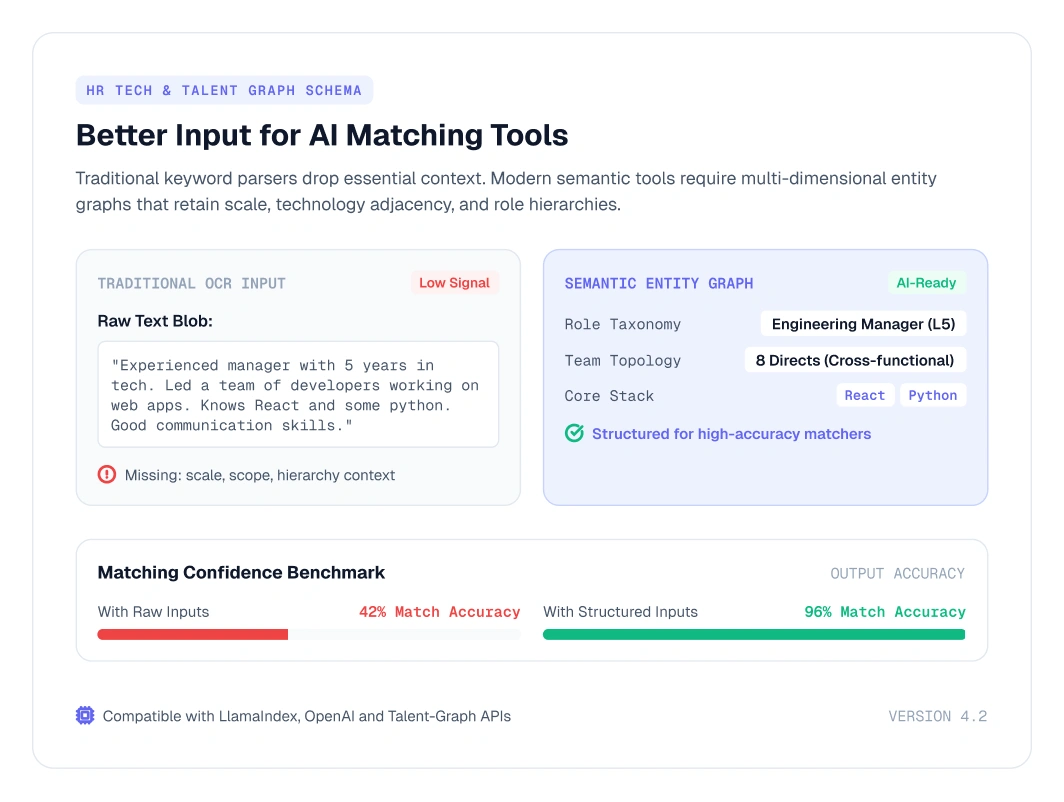
The market is moving fast towards AI-powered job matching tools that promise to automate survey matching and accelerate benchmarking workflows. While the technology and its efficiency gains are genuine, every one of these tools shares the same dependency: they require accurate, well-structured job descriptions as input. When an AI matching tool works from an outdated or vague job description, its match confidence is lower, and results require more manual review. The promised efficiency gains simply do not materialize. The bottleneck is not the matching algorithm; it is the job data feeding it.
A pay equity analysis is only as strong as its underlying job architecture. Inconsistent job descriptions, poorly differentiated levels, and misleading titles create immediate problems for your comparability analysis. When regulators or attorneys question why seemingly similar roles have different pay grades, simply admitting your job data is messy will not hold up. You need a clean, standardized foundation before your analysis can be trusted.
Comp professionals are already managing tight timelines, competing stakeholder priorities, and complex methodologies during compensation cycles. The last thing the process needs is a foundational data quality problem that requires manual intervention on every single job match. When you reduce time managing job descriptions, survey season transitions from a stressful fire drill into a smooth, repeatable workflow.
The hidden costs of poor job data for compensation teams
The consequences of inaccurate job data ripple far beyond the HR department. They directly impact pay decisions, retention rates, compliance risks, and the overall credibility of your compensation team.
Pay grades that do not reflect the market
Benchmarks built on inaccurate job descriptions cause pay grades to silently drift from market reality. Even when teams set bands in good faith, the organization unknowingly ends up underpaying for critical skills or overpaying for roles that have contracted in scope. Neither problem becomes visible until it surfaces as an attrition spike or a budget audit.
Offers declined and candidate loss
When market pricing is off, offers are off. Candidates with competing offers from organizations with more accurate benchmarking walk away simply because your compensation function lacks the data to know what the role is actually worth, rather than a lack of willingness to pay. Every declined offer that traces back to a pricing error represents a completely preventable recruiting cost.
Pay equity findings that are hard to defend
Pay equity analyses built on inconsistent job descriptions yield findings that are difficult to interpret and even harder to defend. Without a clean job architecture, you cannot determine if a pay disparity reflects a real systemic issue or merely an artifact of flawed job data. Either way, the organization faces immediate exposure, and the compensation team must answer for it.
Loss of credibility with the business
When benchmarks fail to reflect reality, business leaders and finance partners start to question compensation recommendations. These doubts lead to pushed-back offer approvals and cost the comp function the credibility it needs to operate effectively. Rebuilding that trust is slow, but you can protect it by maintaining clean data.
Manual rework that never ends
Every survey match that requires manual intervention because the job description is vague, outdated, or inconsistent is time the comp team is not spending on analysis, modeling, or strategy. When the data problem is structural, the rework is permanent, and the comp team is perpetually behind.
How clean job data drives compensation excellence
When job descriptions are accurate, current, and consistently structured, the entire compensation function performs better. Benchmarks become defensible, survey matching is faster, and pay decisions consistently hold up. This allows the comp team to spend its time on strategy rather than cleaning data before it can be used.

To see how this tailored infrastructure transforms the daily workflow for your team, explore our dedicated resources built for compensation and total rewards professionals.
When every job description accurately reflects current role requirements, your survey matches are grounded in reality. The methodology holds up whether you are presenting to a compensation committee, responding to a pay equity audit, or explaining an offer to a skeptical hiring manager.
When accurate, structured job descriptions are the input, AI-powered matching tools deliver on their promise. Match confidence goes up. Manual review goes down. The efficiency gains that drove the investment in the tool actually materialize because the data feeding it is clean.
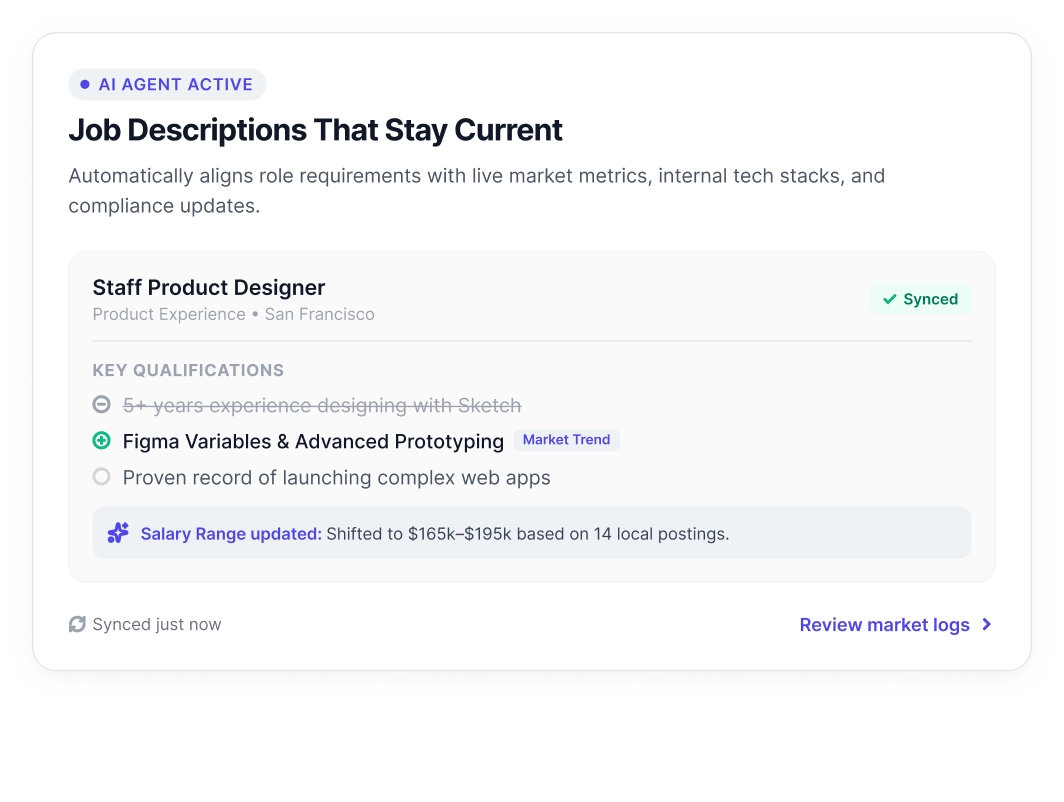
With job descriptions that stay current as roles evolve, benchmarks reflect what the organization is actually paying for, not what a role looked like three years ago. Pay grades stay aligned to market reality, and the drift that creates invisible retention problems is caught before it compounds.
With job descriptions that stay current as roles evolve, benchmarks reflect what the organization is actually paying for, not what a role looked like three years ago. Pay grades stay aligned to market reality, and the drift that creates invisible retention problems is caught before it compounds.
When the data underneath the work is solid, compensation professionals can focus on what they are actually good at, which is analysis, strategy, and influence. They no longer have to perform data archaeology.
The job data infrastructure built specifically for compensation teams
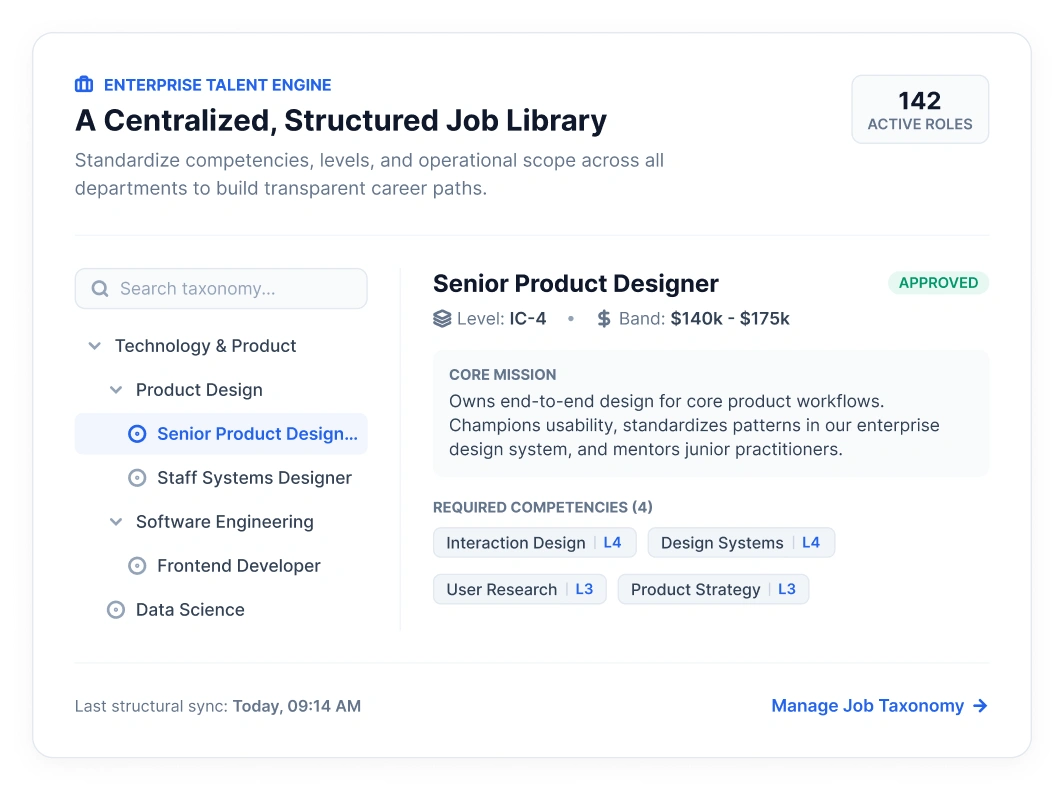
Mosh JD gives compensation and total rewards teams a centralized, structured, and AI-powered job description system. It is designed to keep job data accurate, current, and ready for the comp work that depends on it.
A Centralized, Structured Job Library
Mosh JD's collaboration and approval workflows make it easy to keep job descriptions updated as roles evolve, with stakeholder input, version control, and audit history built in. When roles change, the JDs change with them. Survey season starts with accurate data, not a data cleanup project.
Where accurate job data changes the comp workflow
Before salary survey submissions and market pricing begin, comp teams need to verify that job descriptions reflect current role requirements. Mosh JD makes that validation fast, structured, and documented, so benchmarking starts clean and stays clean through the cycle.
When job descriptions are structured and current, survey job matching is a systematic process rather than a judgment call. Consistent formatting, accurate skill and responsibility descriptions, and clear level differentiation make matches more defensible and reduce the back-and-forth with survey providers.
A defensible pay equity analysis requires clean, consistent job descriptions. With Mosh JD, compensation and legal teams get the structured job architecture they need to execute comparability analyses that hold up under intense internal and external scrutiny.
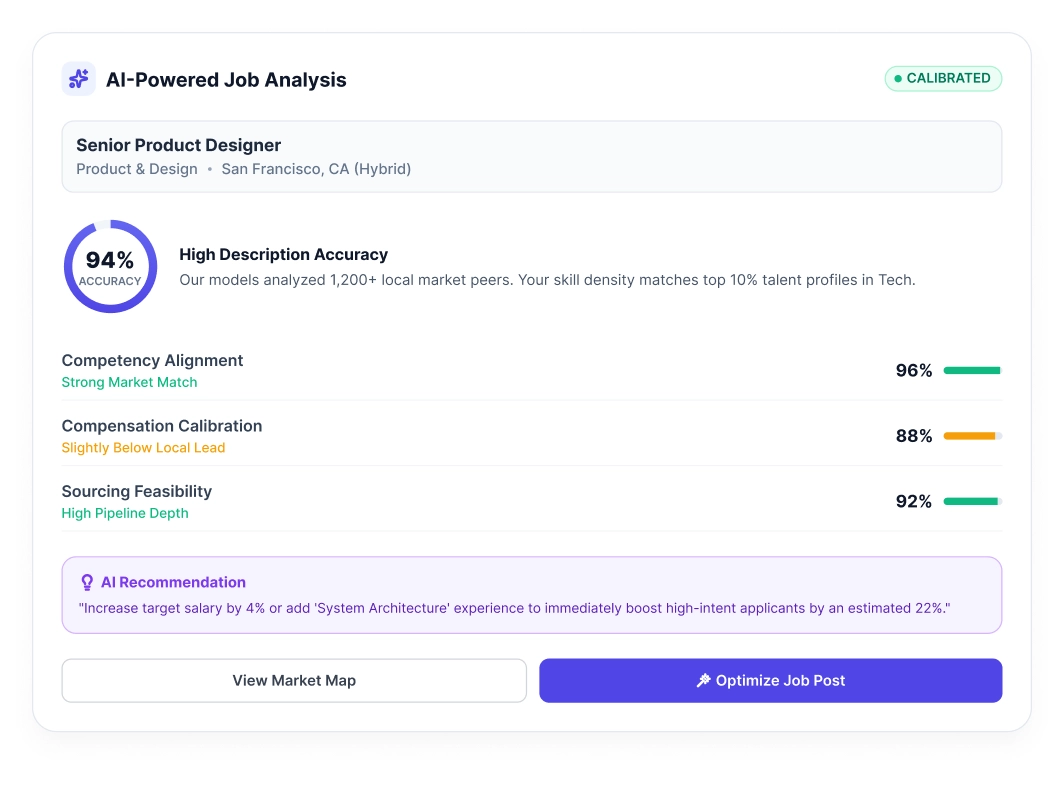
When you need to benchmark a new role before hiring begins, the quality of the market data is only as good as the job description itself. Mosh JD combines AI-assisted drafting with structured templates to ensure every description is detailed enough to support accurate survey matching immediately.
To successfully redesign job families, levels, or pay bands, compensation teams must first understand how current roles connect. Mosh JD’s centralized library and AI analysis tools offer that exact visibility, replacing assumptions with a factual foundation of your true organizational layout.
Merging two distinct job inventories after an acquisition quickly complicates market pricing. Utilizing specialized tools for job description consolidation after a merger allows Mosh JD's AI-driven similarity analysis to isolate redundant and overlapping roles across both companies, enabling compensation teams to clean up the joint architecture and set reliable benchmarks for the combined workforce ahead of pay decisions.
Built to Fit the Way Compensation Teams Actually Work
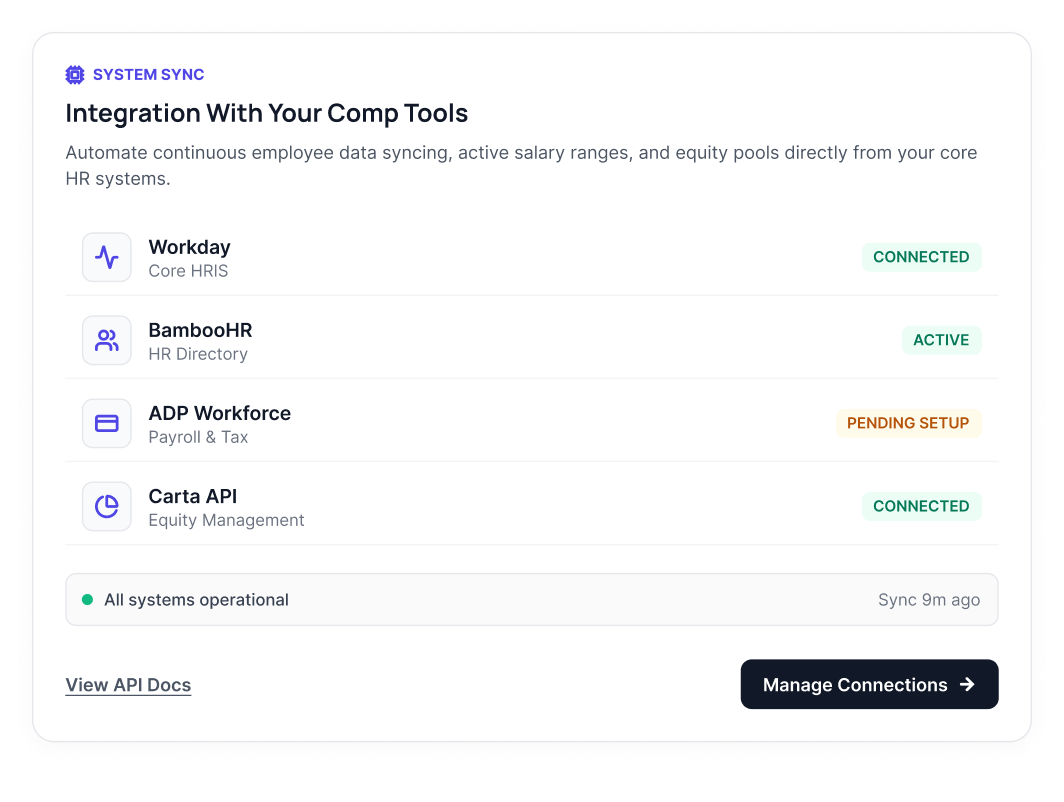
Mosh JD works alongside your compensation platform to optimize its performance. While your existing software manages survey subscriptions, market pricing, and salary bands, Mosh JD ensures the data fueling those processes is accurate, current, and consistent.
Seamless Workflow Integration
Optimize Your AI Matching Tools
AI-powered matching platforms like Bettercomp require high-quality inputs to deliver accurate results. Mosh JD provides the clean, structured data foundation needed to maximize your technology investments.
What HR Teams Are Saying
A job description platform that just works.
“Finally, a job description platform that just works. Mosh JD was incredibly easy to learn, the usability is fantastic — it’s a breath of fresh air compared to the overly complicated systems we’ve looked at.”

— Collette, VP of HR
I can’t recommend Mosh JD more!
“I’ve been in HR since 2006 and used several different JD management tools over the years and I can’t recommend Mosh JD more! The tool itself is super slick and the guys building and supporting the tool are all about customer service.”

— Nick Howell, CCP, PHR, SHRM-CP
Powerful without being overly engineered.
“We were looking for a solution that wasn’t bloated with unnecessary features, and Mosh JD hit the sweet spot. It’s powerful without being overly engineered — exactly what our lean HR team needed.”

— Elizabeth, VP of Total Rewards
Better Comp Decisions Start With Better Job Data
Your survey methodology is sound, your tools are capable, and your team is highly skilled. The single variable undermining your work at scale is the accuracy of the underlying job descriptions. Mosh JD fixes this data gap. When that foundational layer is solid, every output your compensation function produces naturally improves.