

Enterprise-grade governance for your job architecture
When there are no rules defining who can create, edit, and publish job content, organizational consistency degrades, and the data driving your compensation and talent decisions quietly falls apart. Mosh JD provides HR teams with the structure, access control, and version history necessary to govern job descriptions according to your organization's precise requirements.
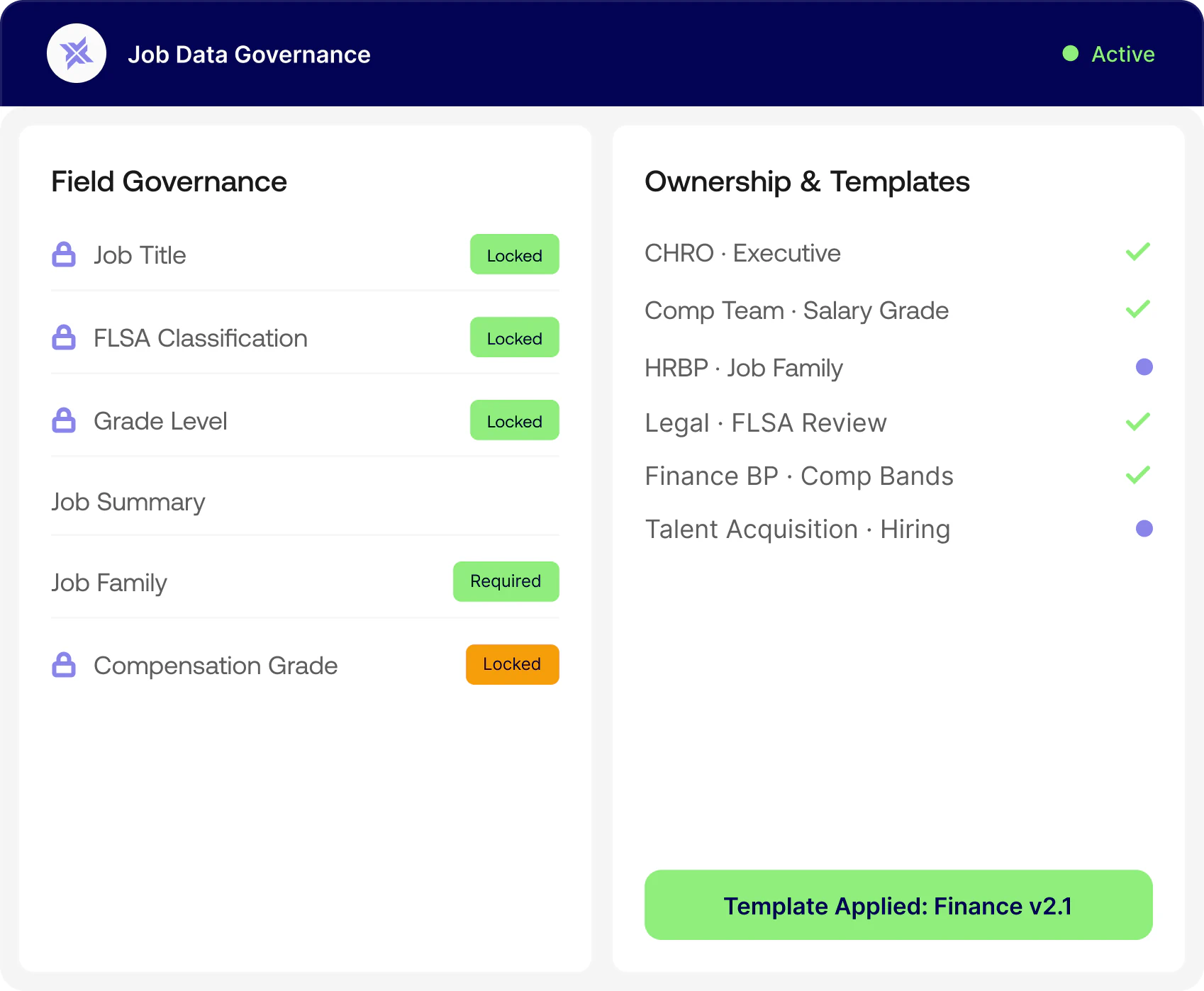
Data accuracy is impossible without governance & could be costing your company a fortune
Consider how job descriptions are typically updated across decentralized organizations: hiring managers duplicate old files, recruiters modify postings, and departments build roles from scratch using completely different formats. Amidst these disjointed processes, the version your compensation team relies on for benchmarking silently becomes outdated.
With no defined ownership, publishing rules, or tracking methods, this lack of HR data governance becomes a significant liability. Inconsistent documentation undermines pay equity efforts, introduces classification risk, and erodes trust across downstream functions that depend on clean job data.
No structural standards
Departments format job descriptions differently, rendering comparison, benchmarking, and compliance reviews nearly impossible.
No defined ownership
When anyone can edit anything, accountability for accuracy is nonexistent.
No access controls
Hiring managers, recruiters, and administrators operate in the same environment without differentiation in permissions.
No publishing controls
Drafts go live before undergoing proper review, or finalized versions are quietly edited after approval.
No version trail
When errors occur, there is no system to verify previous iterations, who made the changes, or when they occurred.
Compliance exposure
Uncontrolled job documentation introduces significant risk during pay equity analyses, audits, and job classification reviews.

A Governance System Configured for the Way Your Organization Actually Works
Mosh JD's job description governance software equips HR leaders with the precise tools needed to define structural parameters, assign job description permissions, and monitor change history over time. These capabilities are fully configurable to match your organization's unique structure, moving beyond rigid, one-size-fits-all models.
Templates enforce consistency across every job document. Role-based access controls dictate exactly who can view, edit, publish, and restructure content, scaling down to the department level when necessary. Finally, version history generates a complete, auditable record of every change, ensuring you always know the current state of a document and how it evolved.
We provide the foundational infrastructure required for trusted job data.
The Controls Your HR Team Has Needed Finally in One Place
01
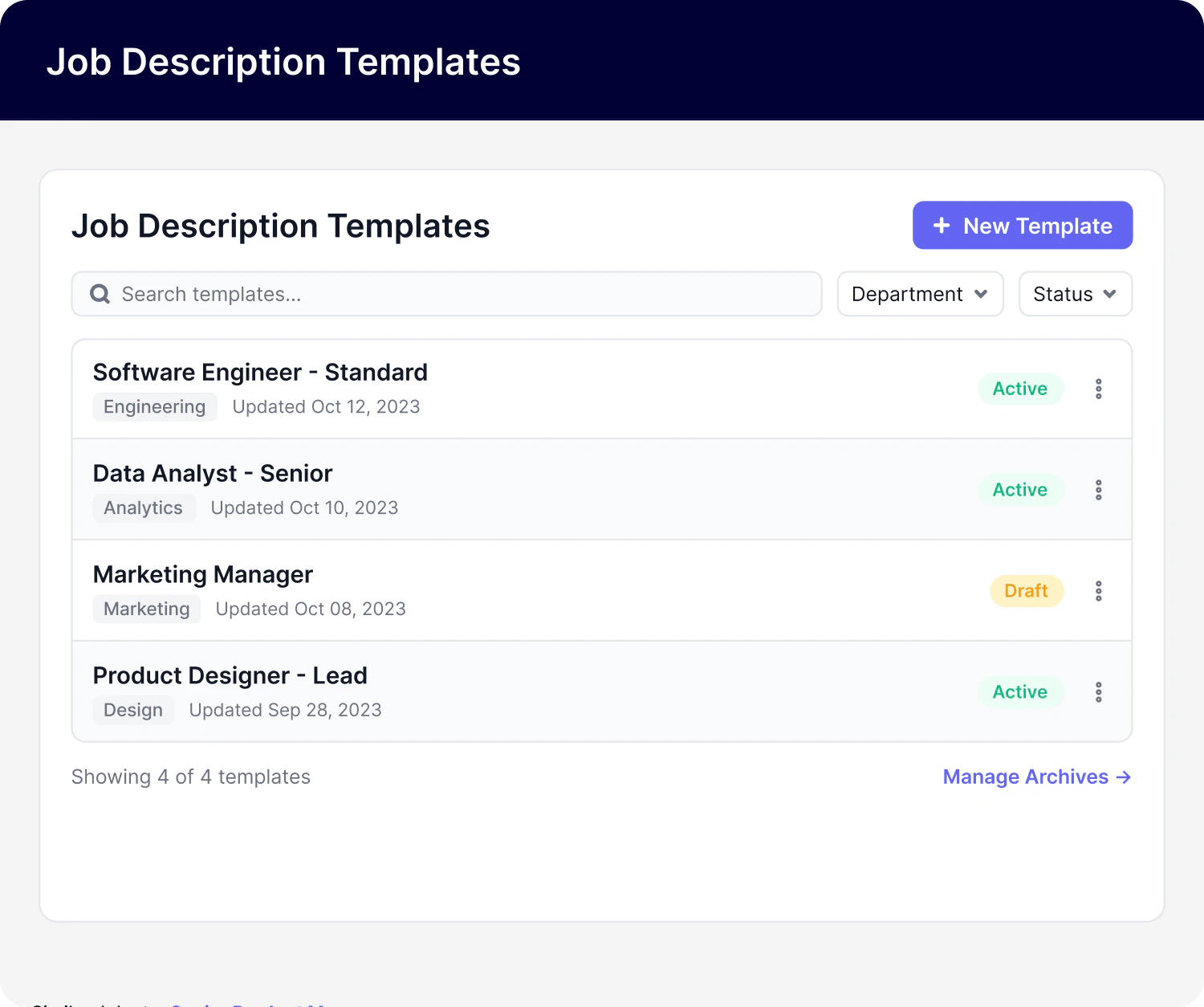
Configurable Job Description Templates
Define the exact structure of your job descriptions including mandatory sections, required fields, and the specific architecture each job family must follow to enforce that standard across your entire catalog.
The Impact on Your Team:
02
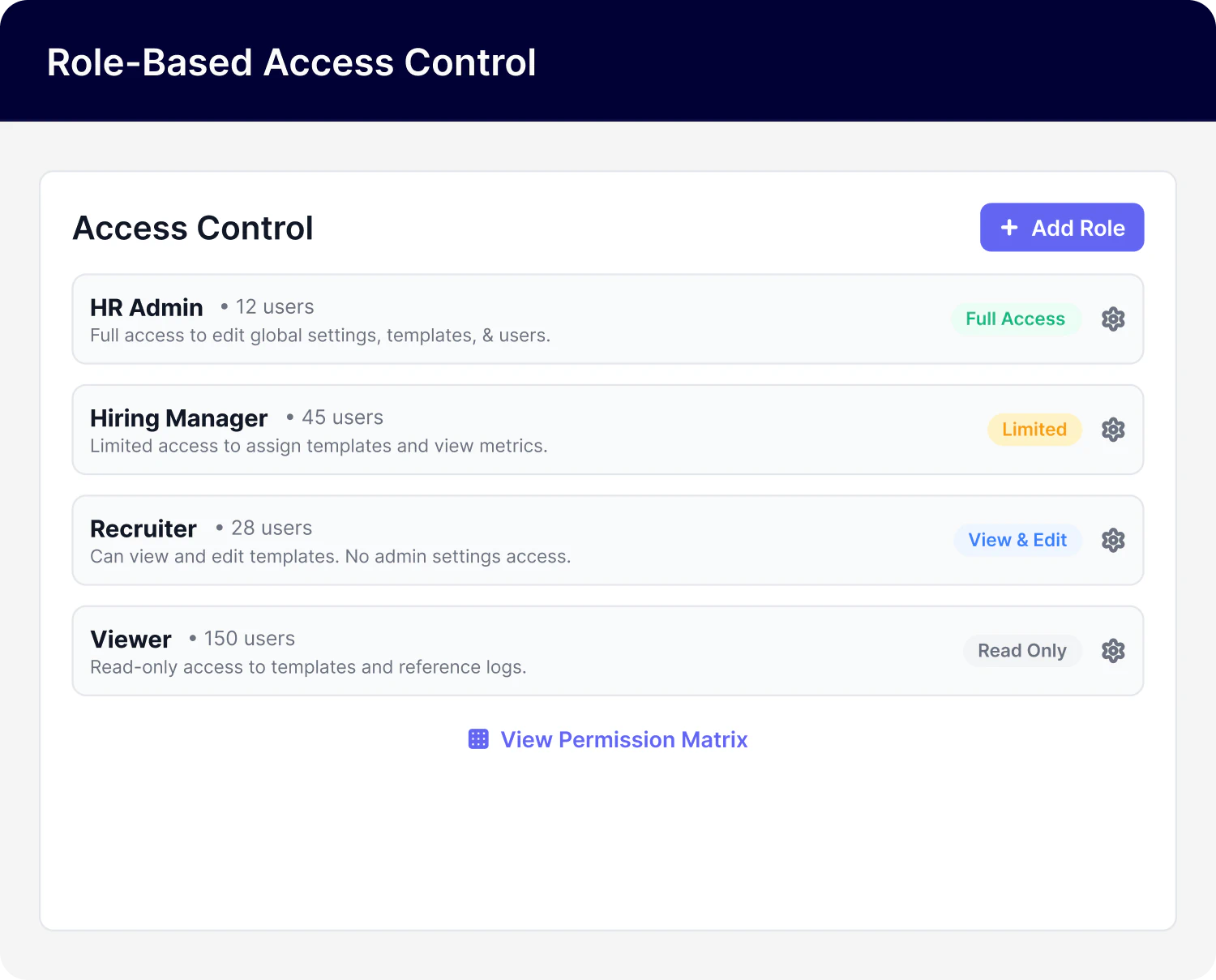
Role-Based Access Control (RBAC)
We give you granular control over every dimension of job description access. This flexible permission framework allows your admin team to configure settings that map perfectly to your organizational structure.
The Impact on Your Team:
03
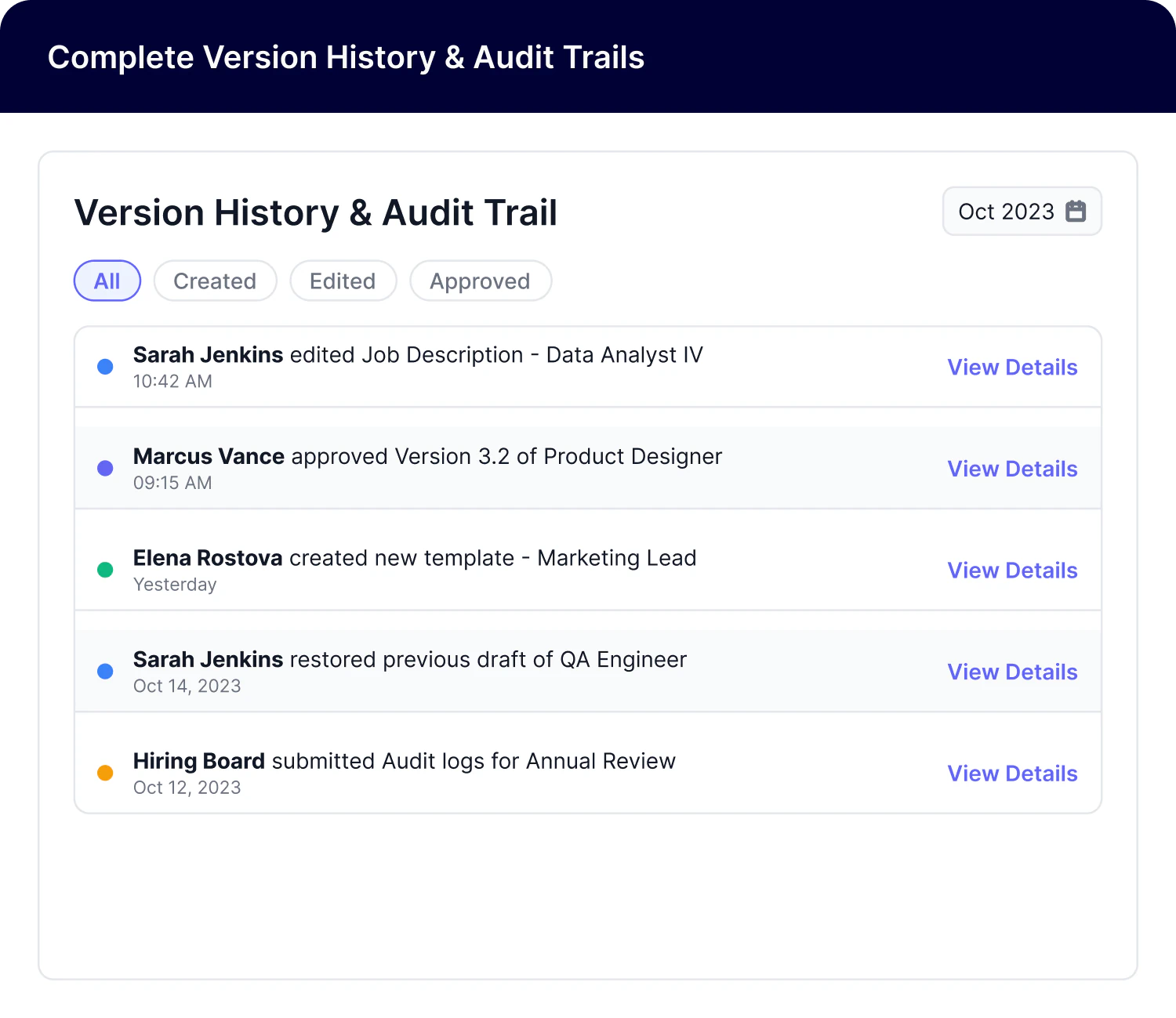
Complete Version History & Audit Trails
Mosh JD automatically captures every modification made to your catalog, recording who made the change, what was altered, and when it occurred. You can review the full version history of any role, compare different iterations side-by-side, and access previous versions instantly.
The Impact on Your Team:
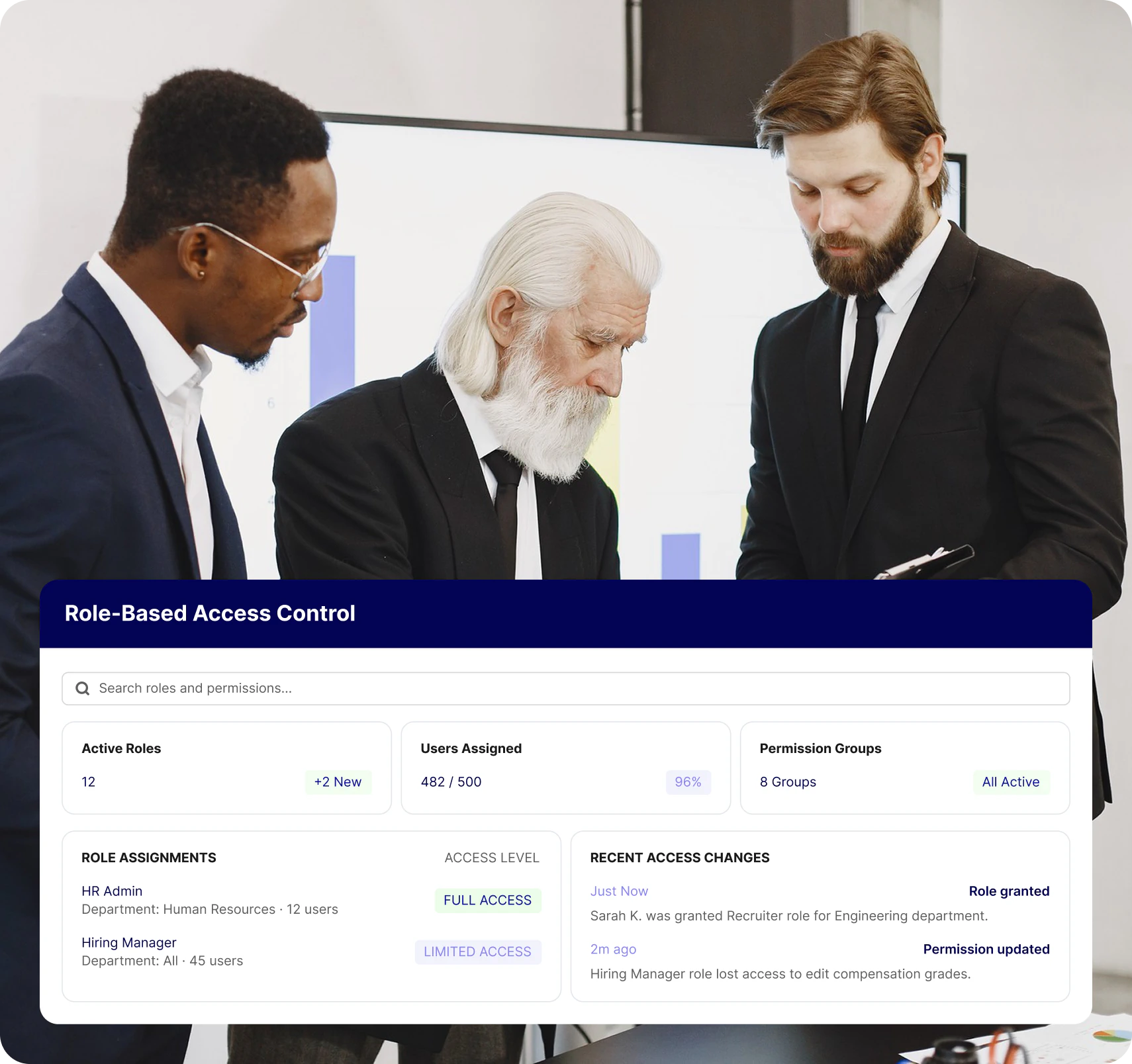
Every Organization Is Different. Your Governance Model Should Be Too.
Some HR teams require centralized control, where a small team reviews and publishes every job description. Others prefer to empower hiring managers to manage their own departments while maintaining strict publishing guardrails.
Mosh JD's governance capabilities are fully configurable to match your immediate operational model, remaining flexible enough to evolve as your organization scales. There are no hardcoded workflows, no rigid approval processes, and no permission structures locked behind complex IT requests. Your administrative team sets the rules, and the platform enforces them.
Configuration options at a glance:
configured per job family, department, or level.
that demand approval before any job goes live.
to prevent non-admins from altering document architecture.
ensuring hiring managers only view their specific departments.
to distribute content broadly without granting editing rights.
available at any time without IT tickets or implementation cycles.
The Situations That Make HR Leaders Wish They'd Had This Sooner
The system of choice for sophisticated people teams.
A job description platform that just works.
“Finally, a job description platform that just works. Mosh JD was incredibly easy to learn, the usability is fantastic — it’s a breath of fresh air compared to the overly complicated systems we’ve looked at.”

— Collette, VP of HR
I can’t recommend Mosh JD more!
“I’ve been in HR since 2006 and used several different JD management tools over the years and I can’t recommend Mosh JD more! The tool itself is super slick and the guys building and supporting the tool are all about customer service.”

— Nick Howell, CCP, PHR, SHRM-CP
Powerful without being overly engineered.
“We were looking for a solution that wasn’t bloated with unnecessary features, and Mosh JD hit the sweet spot. It’s powerful without being overly engineered — exactly what our lean HR team needed.”

— Elizabeth, VP of Total Rewards
Governance That Connects to the Rest of Your Stack
Governed job data is only valuable if it flows precisely where it needs to go. Mosh JD connects seamlessly with your HRIS, ATS, and compensation tools. When a job description is finalized and published through your governance workflow, that clean, approved data becomes instantly available to the systems that depend on it.
No manual exports. No risk of an ungoverned version entering your ATS. Just a single, controlled source of truth feeding your entire HR ecosystem.
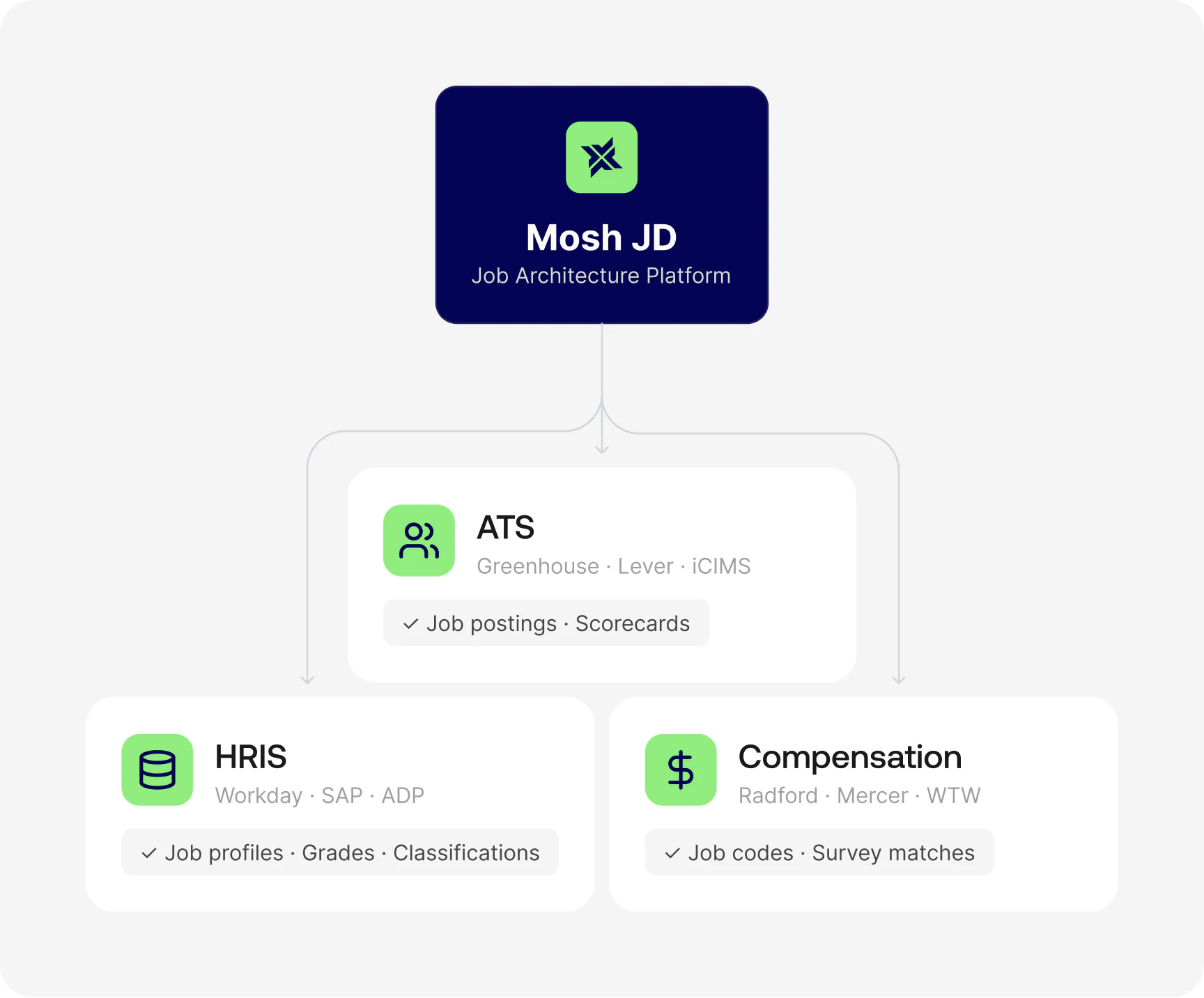
Automatically sync core job data to maintain a pristine system of record.
Guarantee that recruiters and candidates are aligned on the precise requirements of the role.
Feed your analytics tools with governed, accurate data for flawless market pricing.
Frequently ask questions
Your Job Descriptions Are Too Important to Leave Unregulated
Compensation decisions, hiring outcomes, and pay equity compliance all run on the overall quality of your job data. Mosh JD's governance tools provide the structure, control, and audit trail necessary to ensure your data is always accurate, consistent, and completely defensible.