

Move your critical workforce data out of Word docs
Unfortunately, typical organizations leave this information scattered across shared drives, buried in inboxes, and locked in file formats designed in 1983. In 2026, this lack of centralized infrastructure constitutes a severe structural liability.
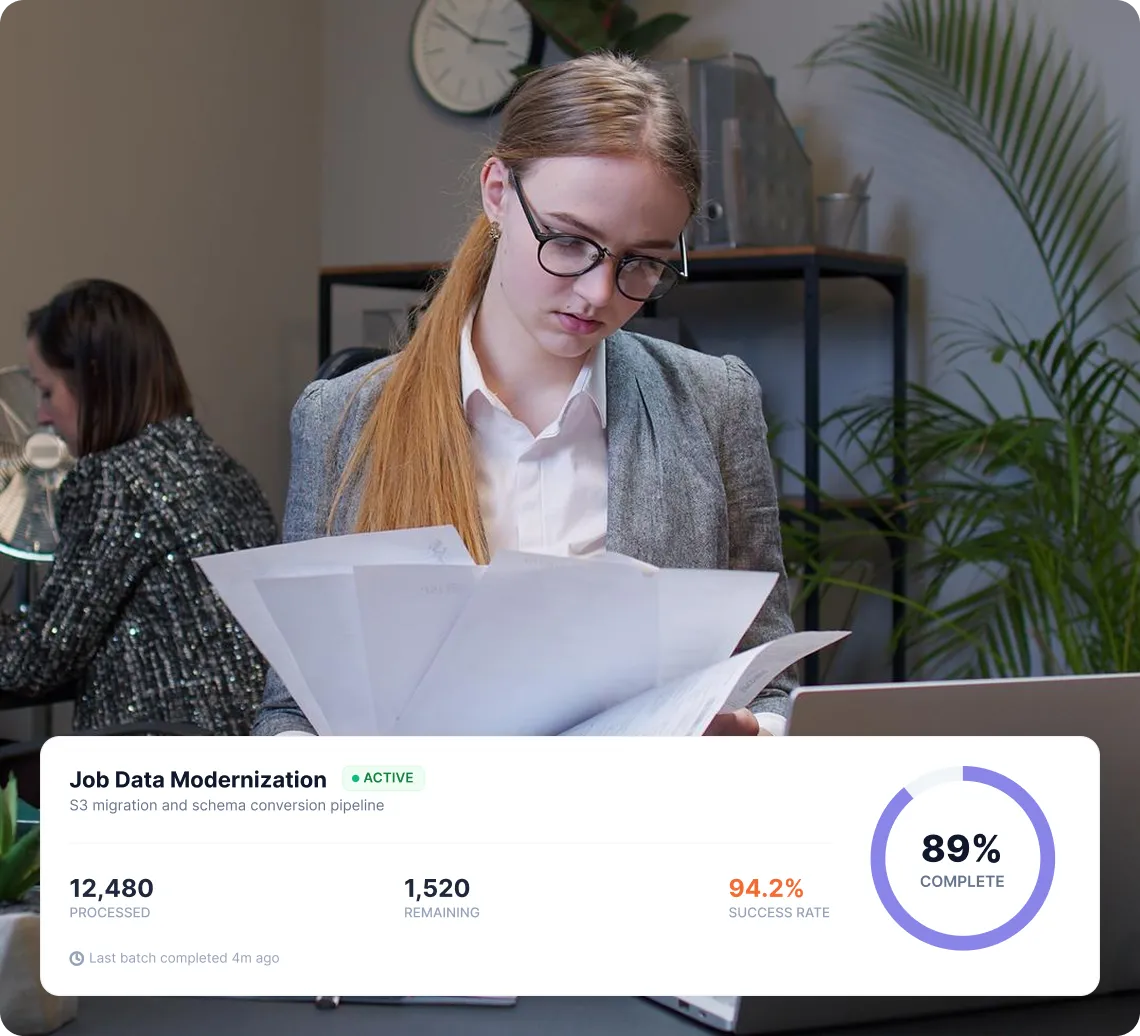
Properly aligning job data to your
job architecture is critical to your business
Ask most companies where their job descriptions live, and you'll get the same answer: SharePoint, a shared drive, someone’s desktop, or an isolated folder called "HR Docs - FINAL." Usually, it is a chaotic combination of all four.
What relies on this data?
While your job architecture is currently managed with the same file infrastructure you'd use to store a cookie recipe, it actively runs vital enterprise functions worth millions of dollars:
Market benchmarking and pay transparency reporting.
FLSA classification and proactive pay equity analysis.
Sourcing alignment, onboarding, and skills gap mapping.
The missing system of record
Every other category of critical business data has a governed, structured, and queryable system behind it, except the data that defines what your roles are actually worth:
relies on an ERP.
relies on a CRM.
rely on an HRIS.
relies on a static Word document managed by whoever edited it last.
Leaving your core talent architecture trapped inside isolated documents creates a massive strategic infrastructure gap. In 2026, forward-thinking organizations are closing it fast.
What Managing Job Data Manually Actually Looks Like in Practice
It's easy to intellectually accept that scattered Word docs aren't ideal. It's harder to face what that actually means day-to-day and what it's silently costing the organization.
Why are job descriptions the only critical data left without a system?
Every critical business asset has infrastructure except job data
This is about recognizing that job data has been left behind in a way that no other critical business asset has, and understanding what that gap is actually costing the organization.
Critical Asset
Financial records
Customer data
Employee records
Contracts & legal docs
Job descriptions
Critical Asset
ERP (NetSuite, SAP)
CRM (Salesforce, HubSpot)
HRIS (Workday, BambooHR)
CLM/Document Management
Shared drive / Word docs
Governed?
Queryable?
Secure History?
Every category of data your organization depends on to operate has a system behind it, except the data that defines what your organization does and what it pays people to do it.
Critical business data needs infrastructure, governance, structure, and queryability to be useful. Job data is no different, yet the cost of treating it as an unmanaged exception has been accumulating quietly for years.
The real cost of treating job data like HR paperwork
The cost of unstructured, unmanaged job data isn't visible in a single line item. It is distributed across comp errors, compliance exposure, wasted hours, and strategic decisions made without the intelligence that was always sitting there, just inaccessible.
Compensation decisions made on bad data
Outdated job descriptions cause pay grades to drift from market reality, leading to missed offers and baseline attrition.
Compliance exposure with no documentation to defend it
Pay transparency guidelines require documented job architecture that file-based storage systems simply cannot produce on demand.
Hundreds of hours lost to manual process annually
HR and comp professionals spend massive amounts of unlogged time chasing approvals, reformatting documents, and searching for the right version.
Strategic decisions made without accessible intelligence
Planning for skills gaps or analyzing internal capabilities becomes impossible when your primary data source lives in unstructured files
Downstream systems corrupted by bad inputs
Inaccurate inputs distort the outputs of your ATS, talent planning suites, and workforce modeling programs.
What it looks like when job data is treated as critical infrastructure
Digitizing job data changes how the organization thinks about what job data is and what it should be capable of doing.
The before and after:
Job data as files
Job data as infrastructure
This shift doesn't require a years-long implementation, but it does require a system built specifically for the way job data works.
A dedicated infrastructure designed specifically for job data.
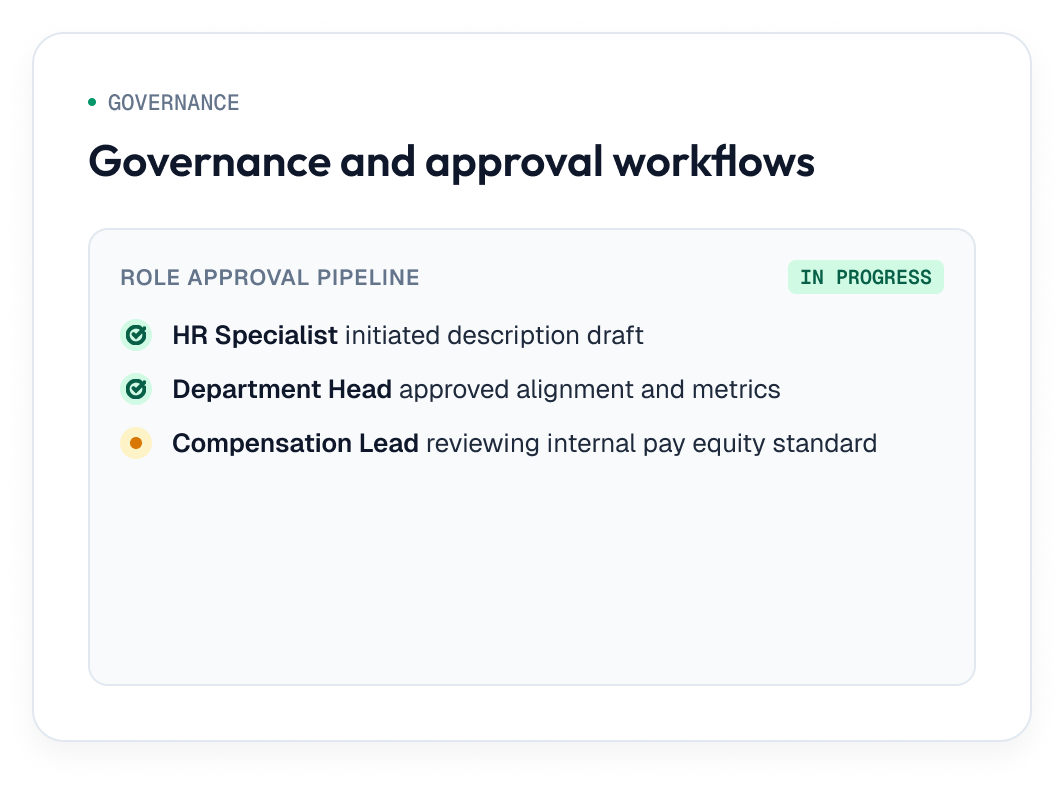
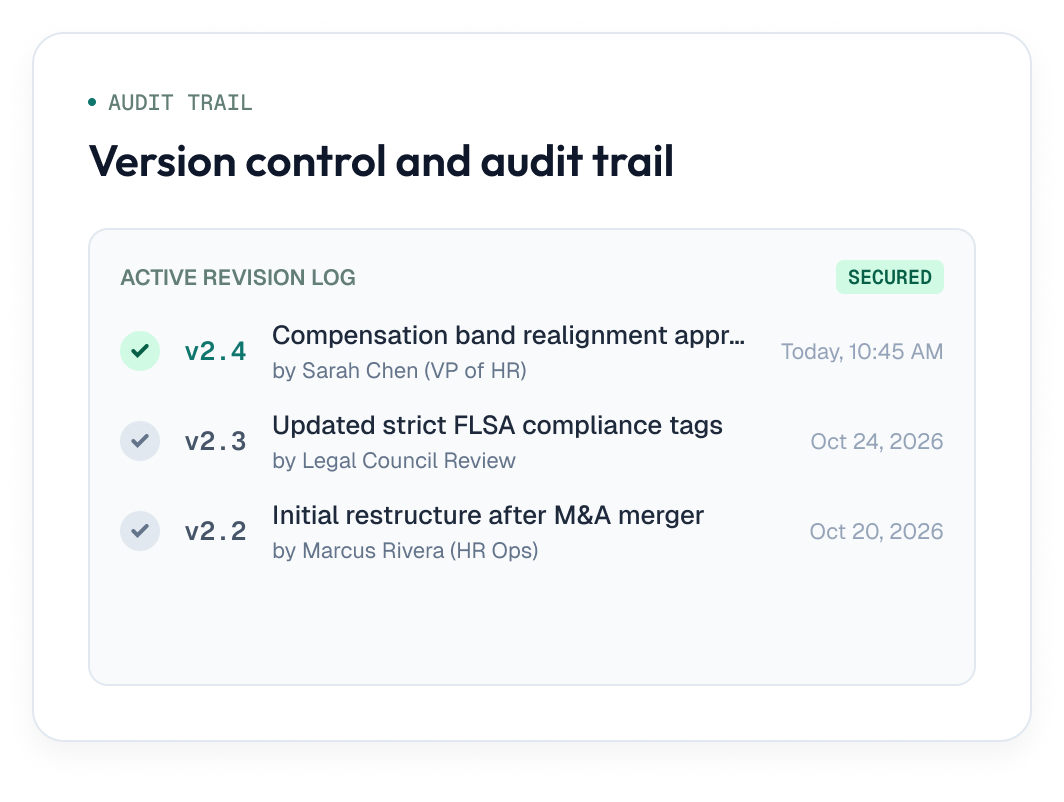
Mosh JD is a platform built specifically for the structure, governance, and intelligence needs of job data, delivering the dedicated workflows, AI capabilities, and integrations your team requires.
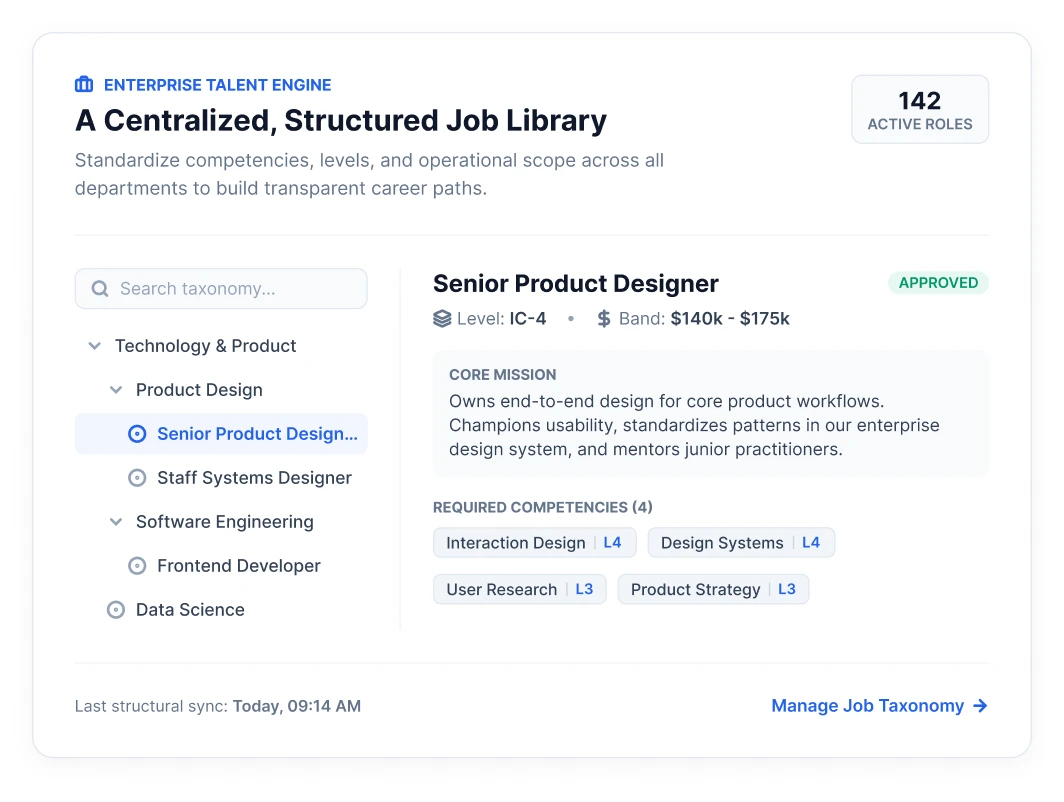
Structured, centralized job library
Move away from scattered files by organizing your roles by family, level, and function within a single centralized job description database to maintain one version of truth.
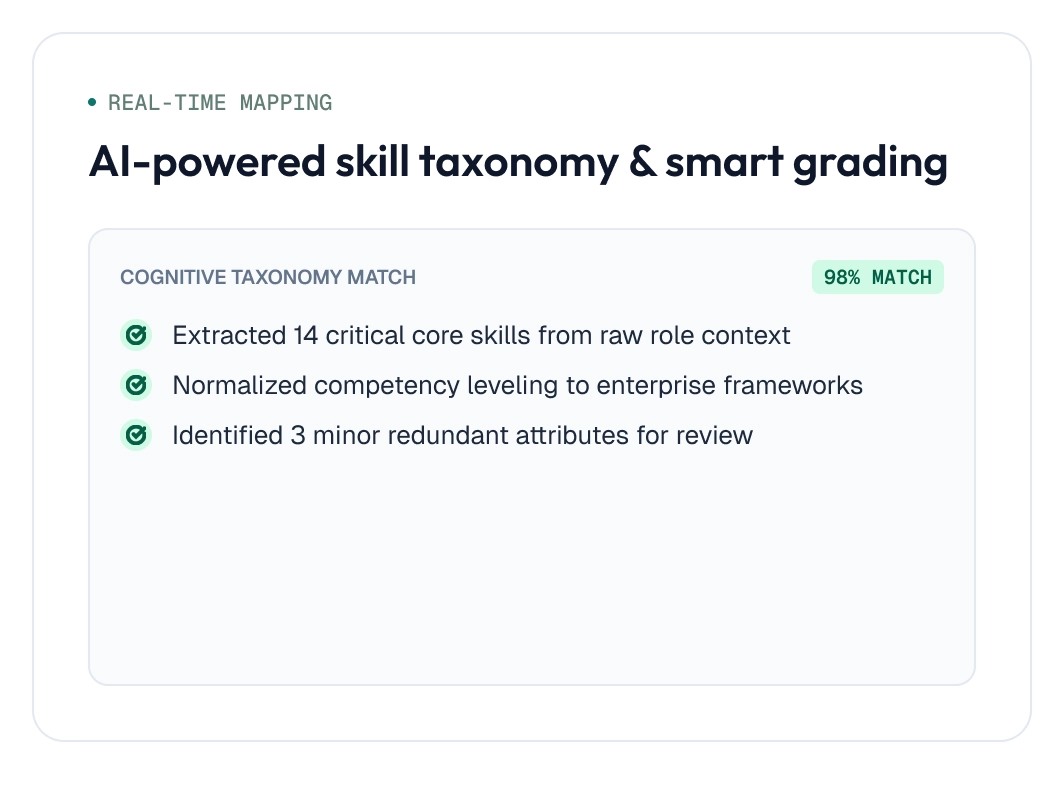
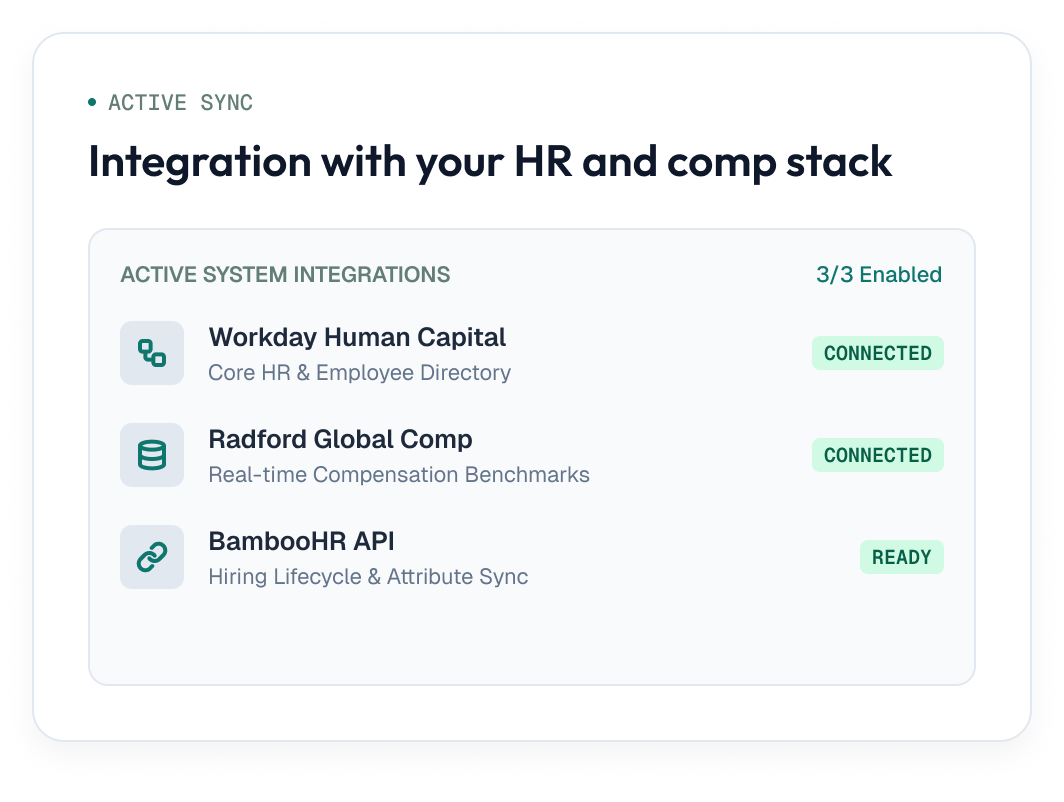
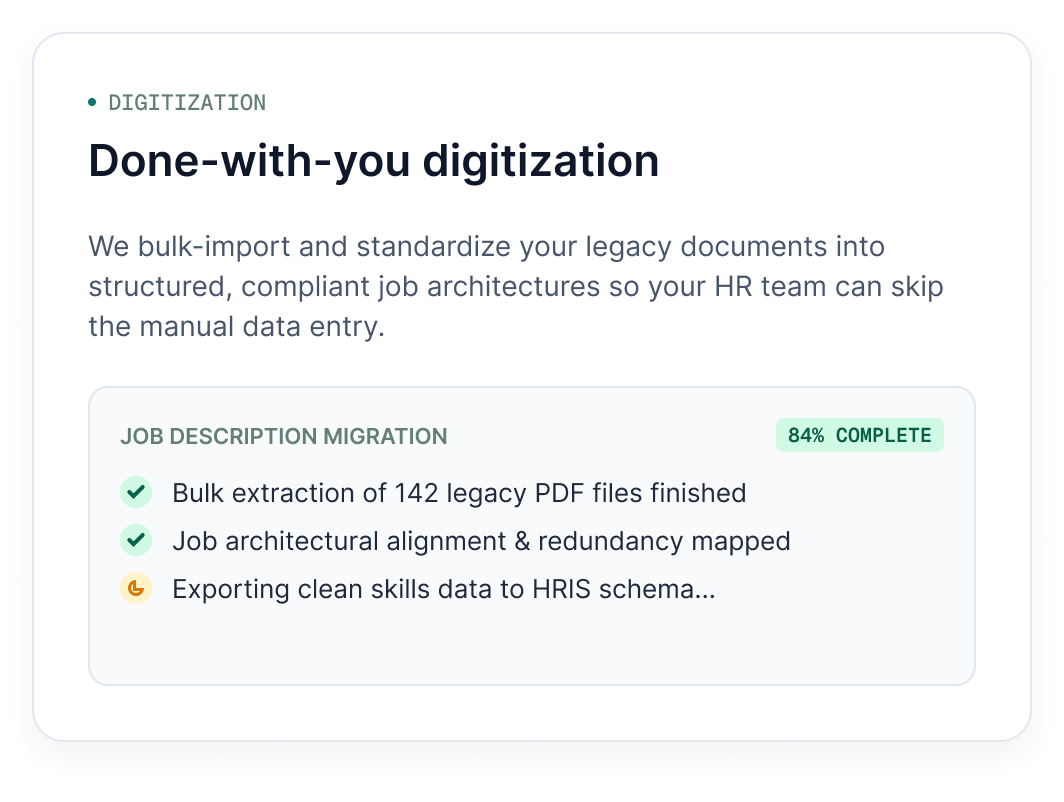
What Becomes Possible When Job Data Is Digitized
The competitive divide in job data maturity is widening
Organizations leveraging structured, queryable job data experience significant operational advantages:
Teams make comp decisions with greater speed and precision.
Companies run pay equity analyses proactively rather than waiting to react to a problem.
Strategic talent questions are answered in hours instead of through months-long consulting projects.
Workflows integrate AI tools seamlessly and capture real efficiency gains because the underlying data is clean.
The legacy liability
Teams still managing job data in shared drives are competing against modern operations with a spreadsheet and a prayer. This operational divide will not close itself. Every quarter that job data remains trapped in static files yields severe compounding costs:
The choice is clear. The question is no longer whether to modernize, but rather how much longer you can afford to pay the cost of staying static.
What HR and Comp Leaders Are Saying
A job description platform that just works.
“Finally, a job description platform that just works. Mosh JD was incredibly easy to learn, the usability is fantastic — it’s a breath of fresh air compared to the overly complicated systems we’ve looked at.”

— Collette, VP of HR
I can’t recommend Mosh JD more!
“I’ve been in HR since 2006 and used several different JD management tools over the years and I can’t recommend Mosh JD more! The tool itself is super slick and the guys building and supporting the tool are all about customer service.”

— Nick Howell, CCP, PHR, SHRM-CP
Powerful without being overly engineered.
“We were looking for a solution that wasn’t bloated with unnecessary features, and Mosh JD hit the sweet spot. It’s powerful without being overly engineered — exactly what our lean HR team needed.”

— Elizabeth, VP of Total Rewards
Your Job Data Is Too Important to Live in a Shared Drive
The organizations making the best workforce decisions in 2026 stand out because they treated job data like the critical business infrastructure it is early enough to build on it, rather than relying on the biggest HR teams or the most expensive consultants.