

The job architecture project is over. The job update phase starts today.
Redesigning titles, pay grades, and career frameworks is the visible work. Updating every job description in the inventory to reflect the new architecture is exactly where projects stall, timelines collapse, and teams ultimately burn out. Mosh JD provides Total Rewards and HR leaders with a structured, AI-assisted execution layer. This system gets your inventory updated fast and accurately.

The project everyone celebrates and the problem that follows it
A job architecture and leveling initiative is one of the most complex, high-stakes projects a Total Rewards function can run.
The framework is approved and the rollout begins. But then someone asks: "When are the job descriptions getting updated?".
Updating 50 roles is manageable, but realigning hundreds of documents becomes an entirely new project with no budget and no runway. This is where architectures stall. The team that just ran a grueling design phase is now expected to execute a company-wide inventory overhaul without any additional resources. It does not have to work that way.
Why the inventory update is harder than the architecture project
The architecture project has a defined scope, a clear deliverable, and a finish line. The inventory update is different. It is high-volume, detail-intensive, and unforgiving. Every job description has to be right, because every downstream decision depends on it.
What the Implementation Gap Actually Costs
The cost of unstructured, unmanaged job data isn't visible in a single line item. It is distributed across comp errors, compliance exposure, wasted hours, and strategic decisions made without the intelligence that was always sitting there, just inaccessible.
A framework that exists on paper but not in practice
Stakeholders heard the announcement. Leadership approved the design. But until the job descriptions reflect the new architecture, every manager, recruiter, and comp analyst is still working off the old one consciously or not. The longer the update takes, the harder it is to drive adoption of the new framework across the organization.
Compensation decisions made against the wrong architecture
Benchmarking against outdated job descriptions forces pay decisions to be made in the gap. This splits your compensation logic, anchoring some decisions to the old framework and others to the new one. The resulting inconsistency is invisible in the moment and expensive to unwind later.
Inconsistent implementation that undermines the framework's integrity
Manual, high-volume updates ensure your new framework gets applied differently across every team and function. Title conventions diverge, and level descriptors drift off course. Your precisely designed architecture is implemented with significant variation, quietly eroding the exact consistency that made the project valuable in the first place.
Team burnout at the worst possible moment
The comp and Total Rewards team just completed a months-long design engagement. They're the subject matter experts, the stakeholder managers, and now the execution team for a high-volume update project. That's a recipe for burnout and for the kind of quality shortcuts that happen when skilled people are asked to do clerical volume work under time pressure.
Delayed adoption that makes the ROI harder to realize
Job architecture and leveling projects are expensive in consulting fees, in internal time, and in organizational change management. The faster the inventory is updated and the new framework is operational, the sooner that investment starts returning value. Every week of implementation delay is a week of ROI not realized.
What it looks like when the
inventory update actually gets done
When the job description inventory is updated accurately, consistently, and efficiently, and the new architecture is reflected in every role across the organization, the framework the comp team designed starts doing the work it was designed to do.
The execution layer your job architecture project has been missing
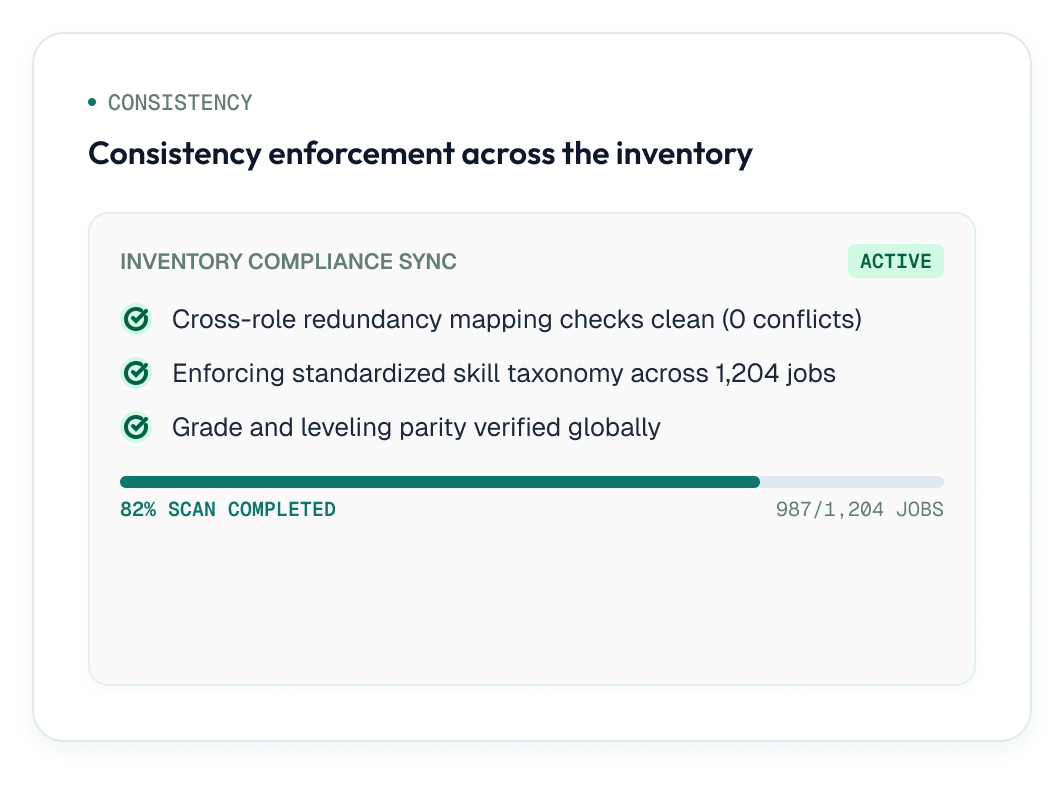
Mosh JD is the system that takes a completed job architecture framework and turns it into an updated job description inventory — systematically, consistently, and at a pace that a manual process can't match.
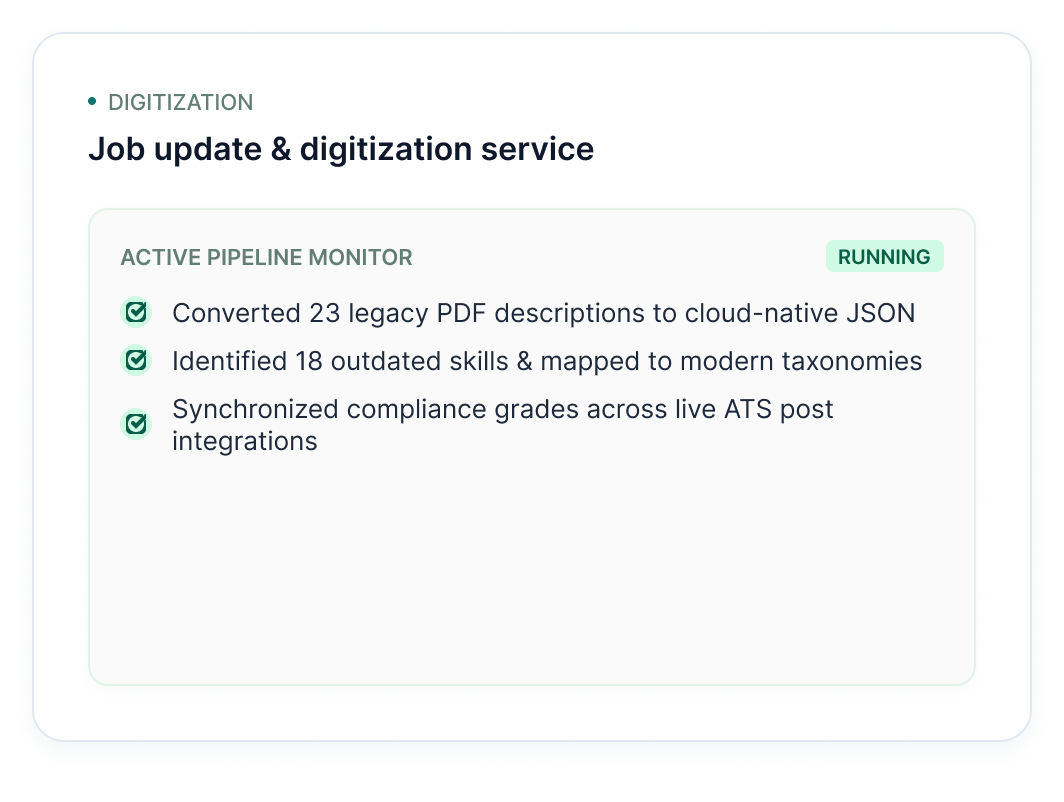
Job update & digitization service
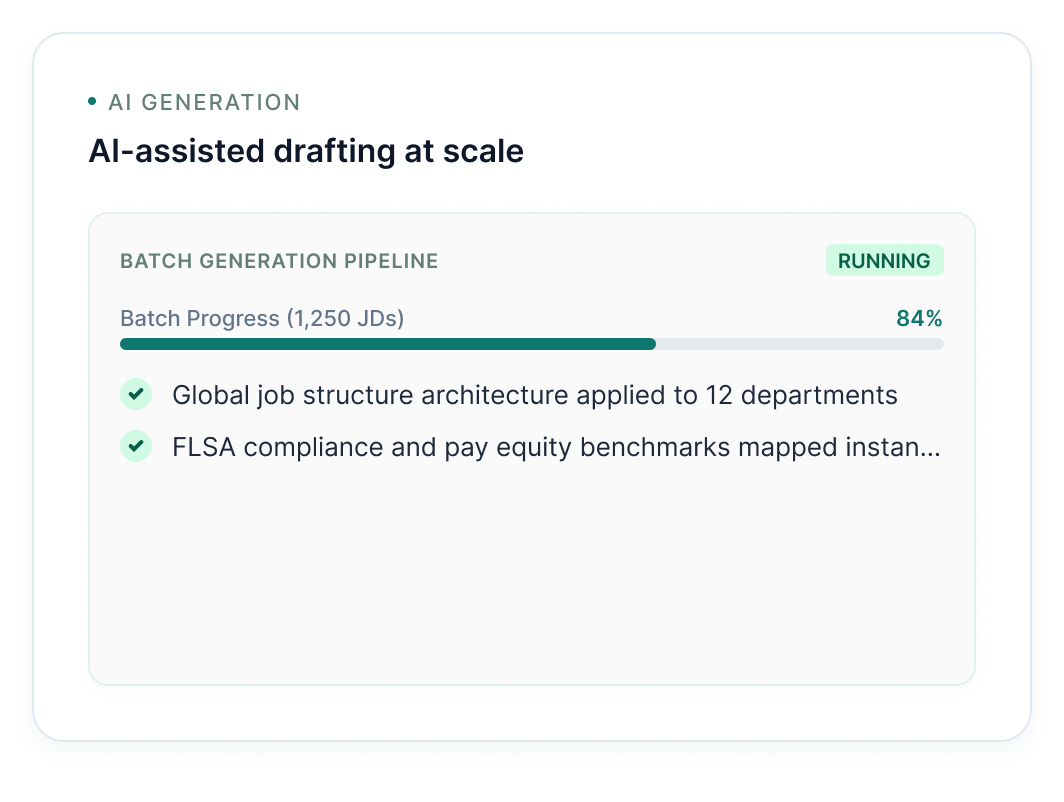
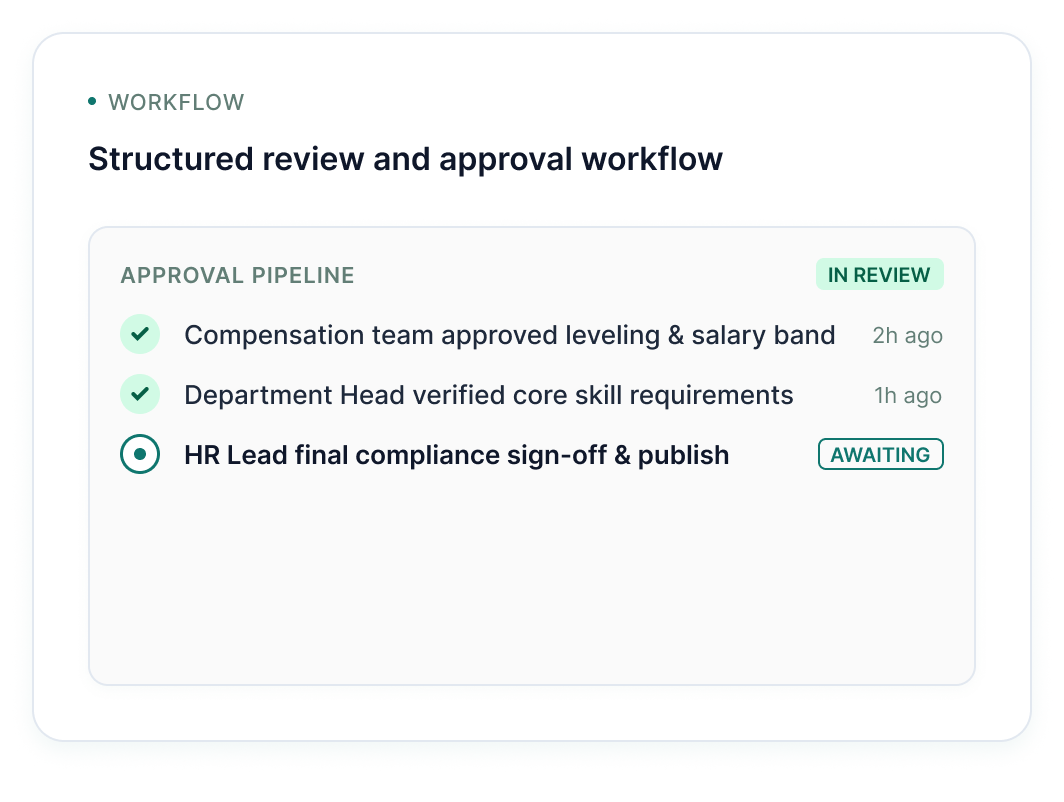
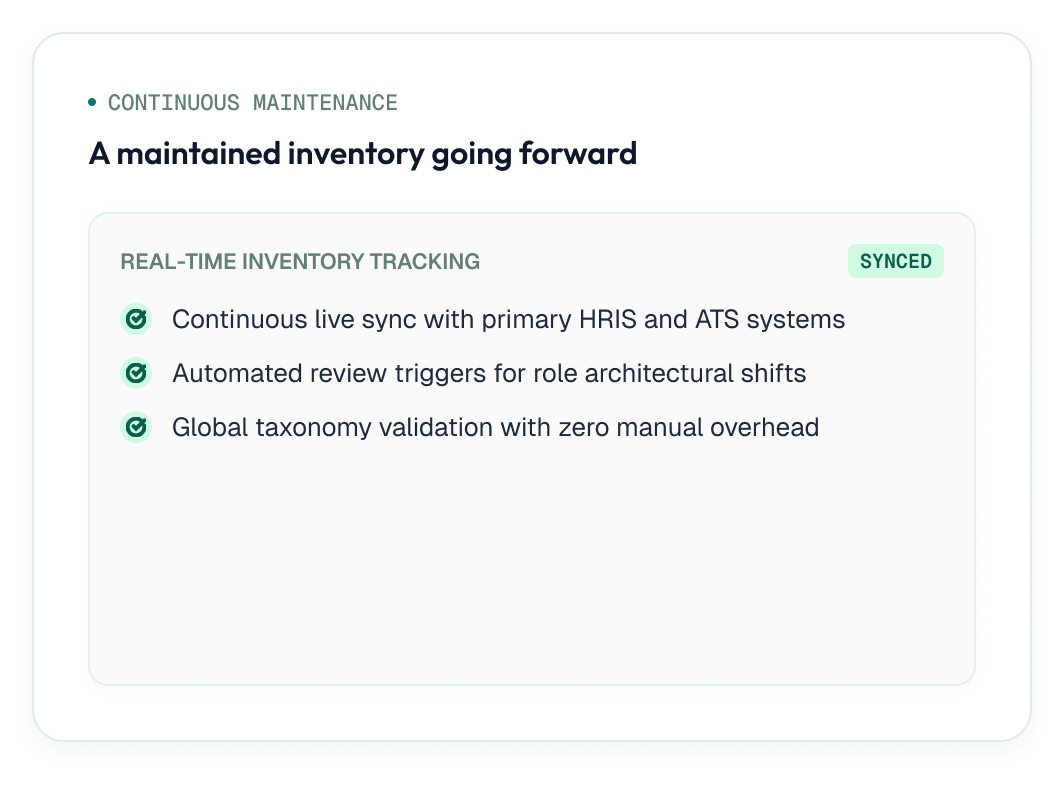
Our done-with-you service provides the massive execution capacity needed to fully update your legacy inventory following a job architecture project. We merge AI-assisted drafting, your new framework inputs, and our job content library to generate review-ready job descriptions. These documents are delivered in batches directly into the platform for rapid stakeholder review. This structured approach allows your compensation team to oversee the work and approve the output without personally handling the volume.
When Total Rewards teams use
Mosh JD after a job architecture project
If You're the Consultant Who Designed the Framework
Delivering a new framework always leads to the hardest conversation in consulting. The client inevitably asks how to update all of their job descriptions. Explaining that a manual update takes months of internal bandwidth creates severe anxiety. This forces the client to struggle internally or expands the project scope unexpectedly.
Mosh JD solves this by making the inventory update a defined and manageable execution step from day one. A structured update ensures a clean handoff and a highly successful client outcome.
If you keep hitting this implementation wall, let us show you a better way.

What HR and Comp Leaders Are Saying
A job description platform that just works.
“Finally, a job description platform that just works. Mosh JD was incredibly easy to learn, the usability is fantastic — it’s a breath of fresh air compared to the overly complicated systems we’ve looked at.”

— Collette, VP of HR
I can’t recommend Mosh JD more!
“I’ve been in HR since 2006 and used several different JD management tools over the years and I can’t recommend Mosh JD more! The tool itself is super slick and the guys building and supporting the tool are all about customer service.”

— Nick Howell, CCP, PHR, SHRM-CP
Powerful without being overly engineered.
“We were looking for a solution that wasn’t bloated with unnecessary features, and Mosh JD hit the sweet spot. It’s powerful without being overly engineered — exactly what our lean HR team needed.”

— Elizabeth, VP of Total Rewards
The framework is done. Skip the six-month inventory update.
Your team designed the architecture. They shouldn't have to manually execute the inventory update too.
Mosh JD provides the execution layer, including AI-assisted drafting, structured review workflows, and a governed system to maintain what gets built so the job architecture project actually reaches its finish line.