

Consolidating job inventories after a merger shouldn't take years
When two companies combine, so do their job architectures, pay structures, and compliance exposures. Manually comparing hundreds of roles across two organizations to find overlaps and assess pay equity risk is one of the most expensive, slow-moving projects in post-merger integration. Mosh JD gives HR and comp teams an AI-powered way to do it in weeks, before the risk becomes a liability.
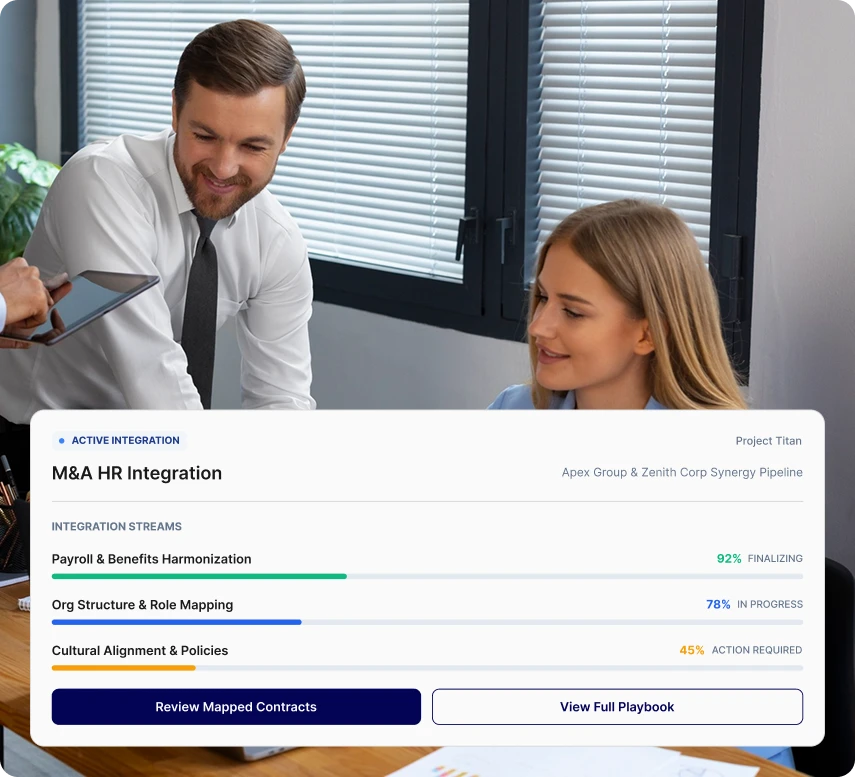
The hidden cost of manual job inventory consolidation
Post-merger integration moves fast everywhere except HR. While the business is pushing for Day 1 readiness and leadership is making workforce decisions, the comp and HR teams are buried in a project that has no good manual solution.
Merging two unaligned job architectures requires reading hundreds of descriptions side by side to spot overlaps. Relying on manual spreadsheets and subjective judgment transforms an urgent integration into a years-long nightmare.
An acquisition means inheriting unknown compensation practices and compliance exposures. You cannot run a defensible pay equity analysis until you know which roles are genuinely comparable. Delaying this step leaves your organization exposed to OFCCP scrutiny, state-level pay transparency penalties, and expensive legal findings.
While your team is stuck sorting through messy data, leaders are actively making layoff decisions, restructuring org charts, and extending retention offers. Evaluating roles in isolation makes it incredibly easy to accidentally eliminate critical capabilities, retain duplicate talent, or trigger unintended equity issues.
Integration isn't a one-time project. New positions roll out, acquired roles shift, and pay structures naturally drift apart over time. Without continuous tracking to flag fresh overlaps, structural issues quietly build back up until a surprise compliance audit forces the issue.
What slow consolidation costs the combined organization
Years of billable hours and internal bandwidth
Manual job consolidation takes years and requires massive resources. Whether you pull internal comp staff from core priorities or hire expensive consultants, the financial cost is high, and the timeline remains stagnant.
Compounding pay equity exposure
Every month of delayed consolidation extends your exposure to unresolved pay equity risks across two different architectures. Post-merger findings, especially from the acquired entity, carry heavy financial remediation and reputational damage. Waiting only makes it harder to prove good-faith compliance to regulators.
Workforce decisions built on incomplete job data
Reduction-in-force planning, role rationalization, and retention strategy all depend on knowing what roles you actually have and how they relate to each other. When that picture isn't clear, decisions get made on title matches and manager intuition, not on an accurate understanding of what the combined workforce looks like.
Duplicate roles and misaligned pay grades going undetected
Without a clear way to spot duplicate roles, organizations maintain redundant positions for years under different titles, grades, and descriptions. This redundancy drains operational budgets. More importantly, it hides severe internal pay inequities that compound quietly until a formal complaint or audit forces a response.
The team doing this work is exhausted and under-resourced
HR and comp professionals managing post-merger integration already operate under extraordinary pressure. Adding a years-long manual comparison project to their plates creates massive operational inefficiency and introduces a severe retention risk for the exact people you need to keep.
What fast, systematic job consolidation makes possible
Replacing manual tracking with a dedicated data governance layer introduces immediate operational clarity across every downstream talent program.
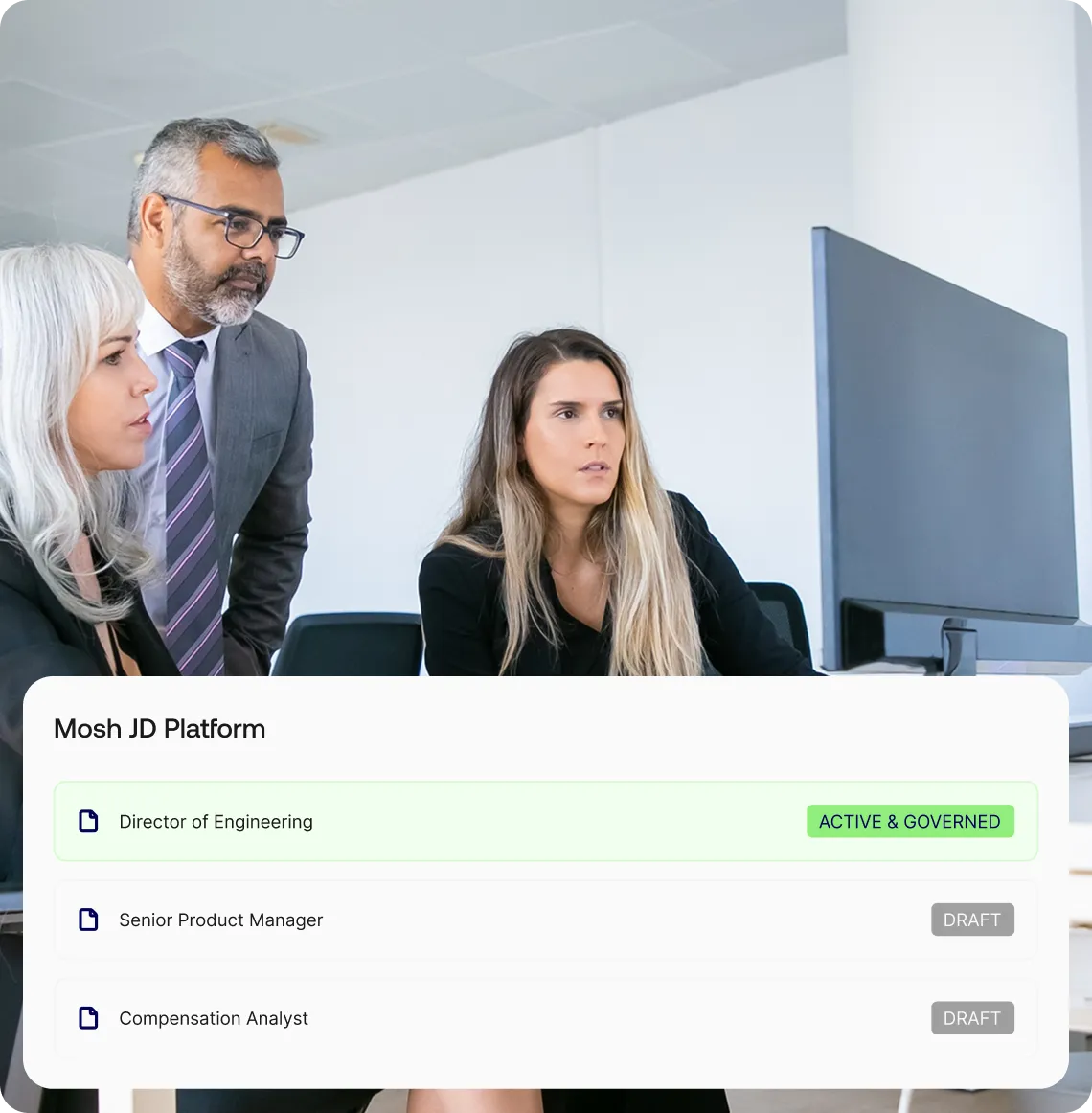
Within weeks, HR and comp leaders have a structured, AI-analyzed view of role overlap across both organizations, with similarity scores, flagged duplicates, and a foundation for decisions that used to take years to reach.
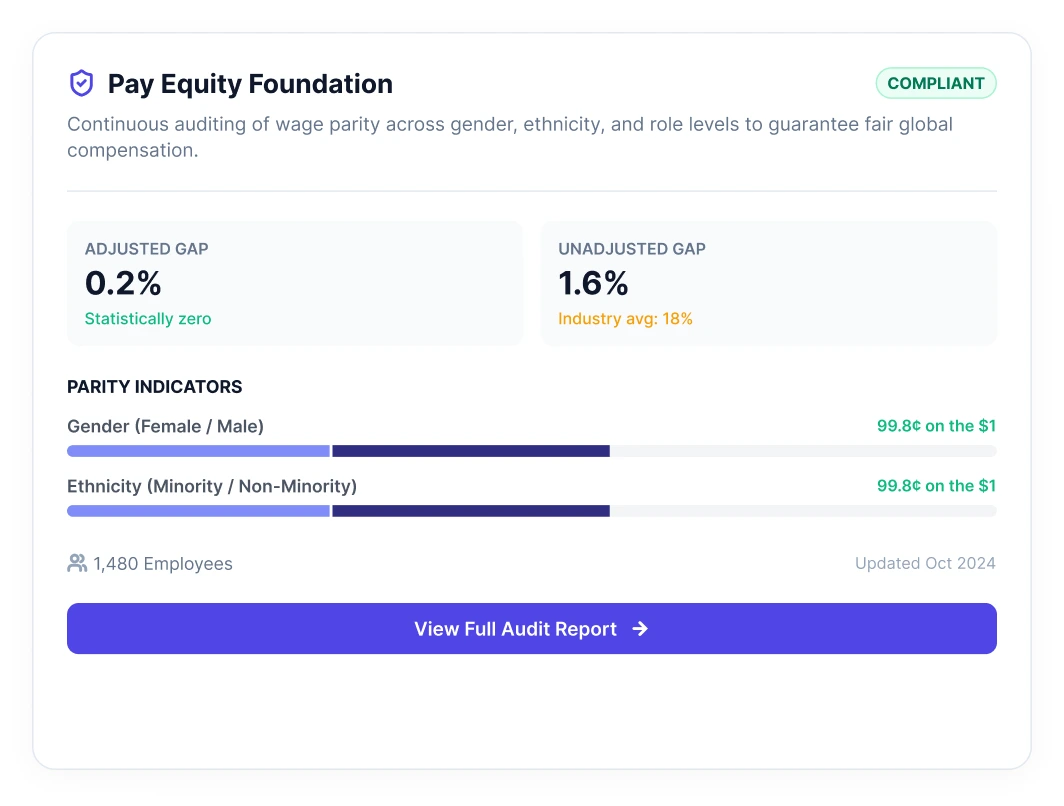
Proactive consolidation allows pay equity analysis to begin while you still have time to act. It lets your team fix discrepancies before audits, complaints, or compounding financial exposure turn into public liabilities.
When leaders clearly understand the combined workforce and how roles relate to each other, they can base RIF decisions, retention offers, and org design choices on solid structural data. This ensures leadership strategy relies on accurate insight instead of unreliable title matches or guesswork.
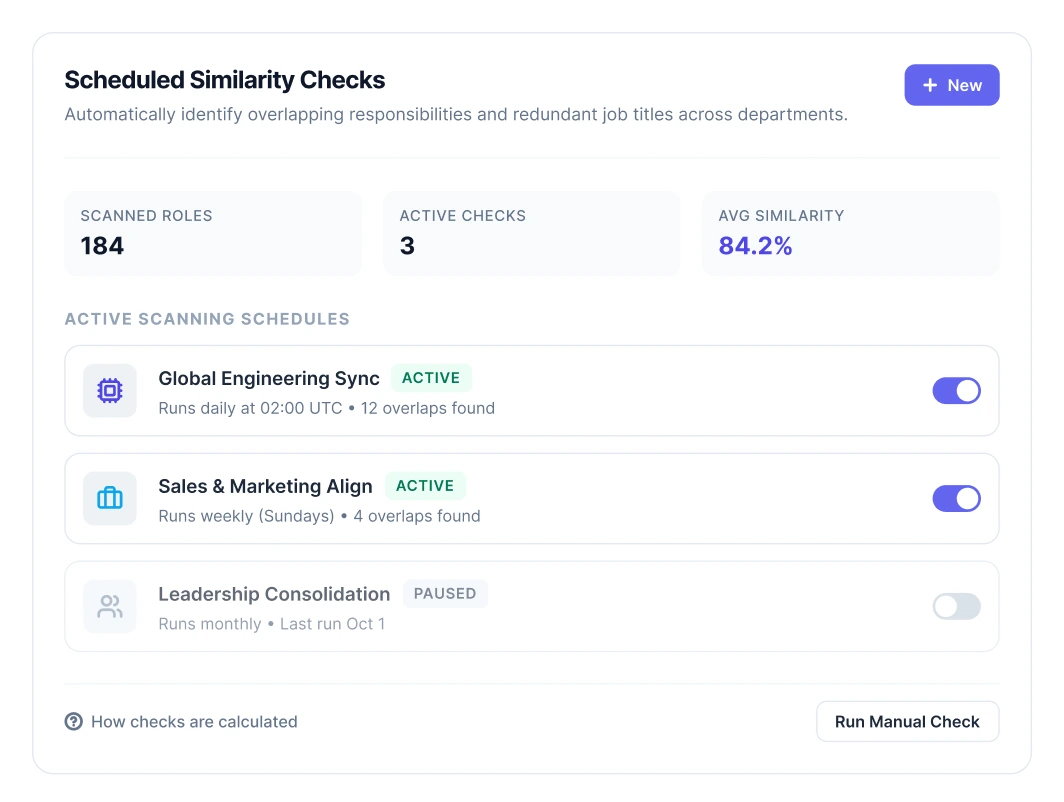
Scheduled similarity checks track your evolving workforce to surface new role redundancies and pay equity risks. This keeps consolidation moving as a continuous, automated process instead of a multi-year project that resets every time a role changes.
Every comparison, every decision, and every update is logged automatically. When regulators or legal teams ask for documentation of the consolidation process, the record is already there.
How Mosh JD accelerates post-merger job consolidation
Mosh JD gives HR and compensation teams an AI-powered system to move through job consolidation systematically — replacing years of manual comparison with a structured, fast, and auditable process.
AI-Powered Job Similarity Analysis
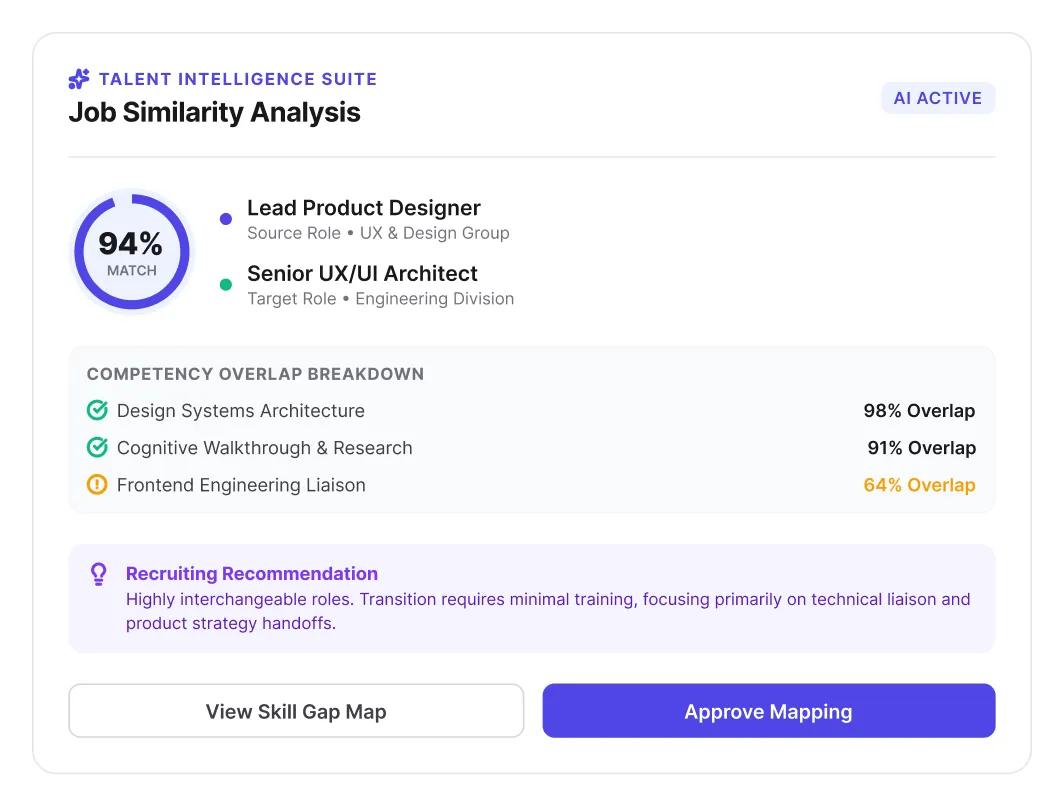
Upload both organizations' job descriptions into Mosh JD so the AI similarity engine can do the comparison work. It analyzes job content across both inventories to surface similarity scores, highlighting likely duplicates, closely related roles, and genuinely distinct positions. What used to take teams months of manual review can be completed in a fraction of the time.
Mosh JD delivers a prioritized view of where overlap exists. This allows HR and comp teams to focus decision-making energy where it matters most, targeting the highest-risk areas first.
Where This Changes the Timeline
The Problem Is Real. So Is the Cost.
A compensation expert who managed post-merger job integration at VOLVO shared what a traditional approach looks like in practice:
Four Years of Manual Work
His team spent four full years comparing job descriptions across two organizations just to identify overlaps and assess pay equity risks.
Enterprise-Scale Resources
This massive timeline was for a single acquisition, handled by a company with the extensive resources to staff the project properly.
The Standard, Not an Exception
This is not a rare case. It is exactly what manual job consolidation looks like at scale.
For organizations without Volvo's resources, or organizations that can't afford to wait four years for integration clarity, the status quo isn't a viable option. The risk compounds with every quarter the consolidation is incomplete.
What HR and TA Users Say
I can't recommend
Mosh JD more!
"I've been in HR since 2006 and used several different JD management tools over the years and I can't recommend Mosh JD more! The tool itself is super slick and the guys building and supporting the tool are all about customer service."

— Nick Howell, CCP, PHR, SHRM-CP
Your integration timeline can't wait for a manual process
Mosh JD gives your team the AI-powered tools to move fast, document decisions, and build a clean foundation for the combined organization, without staffing a years-long manual project.